Waverly Hills Sanatorium: The True History of America’s Most Haunted Hospital
Disease, design, daily life and preservation inside a Kentucky landmark.
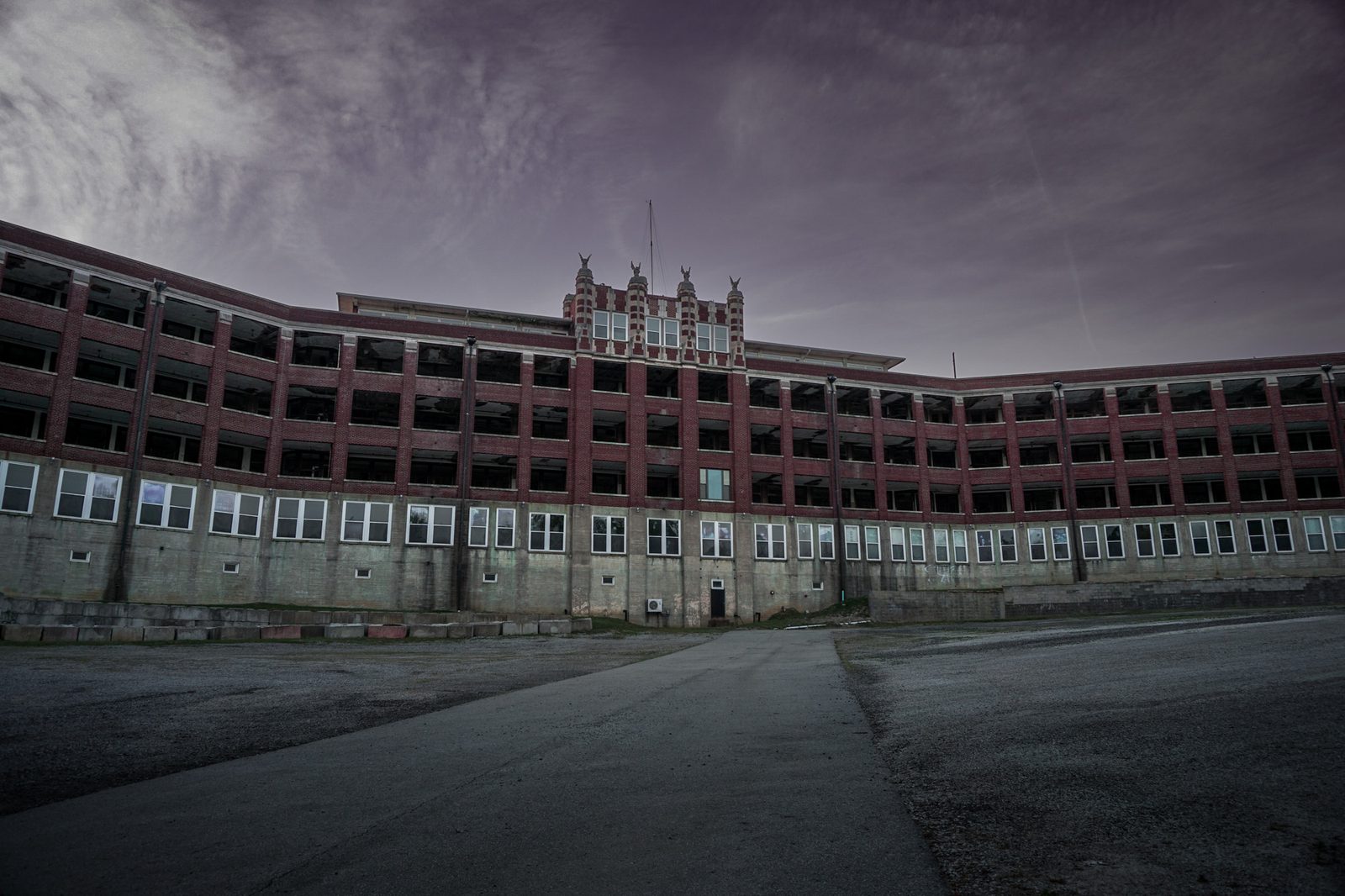 Photo source: Amy’s Crypt
Reader’s note: supernatural accounts are presented as folklore and reported experiences, not established fact.
It looms on a wooded hill above Louisville, Kentucky — a five-story Gothic Revival giant with empty windows that stare like hollow eyes. The locals call it the most haunted hospital in America, and television crews and paranormal investigators have made the pilgrimage for decades. But long before the ghost stories, Waverly Hills was something else: a city unto itself, built to wage war against the deadliest disease of its age.
This is the true history of Waverly Hills Sanatorium — the epidemics, the architecture, the daily life, the decline, and the remarkable rescue that saved it from the wrecking ball. At The Haunted Atlas, we believe the real story is haunting enough.
The White Plague Comes to Louisville
In the early 1900s, tuberculosis was the great terror of American life. Called the “White Plague” for the pallor it gave its victims, TB killed more Americans than almost any other disease, and there was no cure — no antibiotic, no vaccine, nothing but the hope that clean air and rest might let the body fight back.
Louisville, Kentucky, was hit especially hard. In the early 20th century the city had one of the highest TB death rates in the nation, driven by crowded housing and damp river-valley air. City leaders knew they needed a dedicated place to treat patients away from the dense neighborhoods where the disease spread so easily. Their answer was to build on a hill — high ground, fresh breezes, and distance from the city below.
A City on a Hill
Waverly Hills began modestly. In 1910, a small wooden sanatorium opened on the hilltop at 4400 Paralee Drive, built to care for just 40 to 50 patients. But the epidemic kept growing, and the little wooden building was quickly overwhelmed.
The response was one of the most ambitious sanatorium projects in America. In 1926, a massive new hospital opened on the hill: a five-story Gothic Revival building of brick and concrete, designed by architects James J. Gaffney and Dennis Xavier Murphy, with room for more than 400 patients. Its wide solariums and open-air porches were designed around the era’s central belief — that fresh air and sunlight were the best weapons against the White Plague.
Waverly Hills was more than a hospital; it was a self-sufficient community. The hilltop complex had its own ZIP code and post office, its own water treatment plant, its own farmland where patients and staff grew food, and even its own chapel. For the people who lived and worked there — sometimes for years — the sanatorium was a small city sealed off from the world below.
Life in the Pre-Antibiotic Era
Daily life at Waverly Hills revolved around the “rest cure.” Patients spent hours each day on open-air porches and in glassed solariums, breathing the hilltop air and resting in sunlight — the standard treatment for tuberculosis before antibiotics existed. Nurses and doctors did what they could with the tools of the era, which included some experimental procedures of the time. There is no need to dwell on the details; what matters is that thousands of patients passed away there over five decades, and the staff who cared for them carried the weight of a disease they could not yet defeat.
Despite the suffering, Waverly Hills was also a place of genuine community. Patients put on shows, published a newsletter, and formed friendships that lasted lifetimes. The staff — many of whom lived on the grounds — built their own social world on the hill. For all its sorrow, the sanatorium hummed with human resilience.
The Tunnel
Perhaps the most storied feature of Waverly Hills is the long, sloping service tunnel that runs from the hospital down the hillside. It was originally built to carry supplies and coal up to the hilltop — but it gained a darker reputation. To spare the remaining patients the distress of watching their fellow sufferers carried out, those who passed away were discreetly moved through the tunnel out of sight. Guides and historians sometimes call it the “body chute,” a nickname that says more about legend than about the quiet, practical purpose it served. Today the tunnel is one of the most talked-about stops on the property’s tours — a plain concrete passage heavy with atmosphere.
The End of an Era
Everything changed in the 1940s and 1950s with the arrival of streptomycin, the first antibiotic effective against tuberculosis. Sanatoriums — built on the premise that isolation, air, and rest were the only hope — suddenly became obsolete. Patients could be treated with medicine and sent home. Waverly Hills, once overflowing, emptied out.
The great hospital closed its doors as a TB sanatorium in 1961. The following year it reopened as Woodhaven, a nursing home, which operated until 1981. After Woodhaven shut down, the building stood empty — nearly twenty years of abandonment during which vandals, weather, and time took their toll on the Gothic giant. By the late 1990s, it seemed destined for demolition.
Saved by the Mattinglys
In 2001, Charlie and Tina Mattingly purchased the property and founded the Waverly Hills Historical Society, determined to save the building and preserve its history. What followed was one of the great grassroots preservation stories in American paranormal tourism: years of fundraising, volunteer labor, and restoration work that slowly brought the sanatorium back from the brink.
The Mattinglys’ vision was twofold — honor the history, and share it. Under their stewardship, Waverly Hills began offering historical tours and paranormal investigations, and the revenue helped fund ongoing restoration. In 1983, the building had already earned a place on the National Register of Historic Places; the Mattinglys made sure it would survive to deserve it.
The Haunting of Waverly Hills
It is impossible to talk about Waverly Hills without talking about the legends — and the owners embrace them as part of the building’s story. Visitors and investigators have reported shadow figures moving through the empty wards, disembodied voices echoing in the halls, and doors slamming on their own in rooms long stripped of their fittings.
The most famous legend centers on Room 502, on the top floor, where guests have reported seeing the apparition of a woman in a white dress. Another beloved story is that of “Timmy,” a child’s apparition said to play with balls rolled down the corridors by visitors. As with all such reports, these are stories told by guests and investigators — not verified facts — but they have made Waverly Hills a mecca for ghost hunters from around the world.
Visiting Today
Today, Waverly Hills Sanatorium at 4400 Paralee Drive in Louisville, Kentucky, is one of America’s most visited haunted landmarks. The Waverly Hills Historical Society runs historical tours that focus on the building’s medical and architectural history, as well as evening paranormal tours and overnight investigations for the brave. Whether you come for the history or the hauntings, you’ll walk the same solariums and corridors where thousands of patients once fought the White Plague — and you’ll leave with a deeper appreciation for both the suffering and the resilience that defined this extraordinary place.
FAQ
Where is Waverly Hills Sanatorium located? Waverly Hills sits at 4400 Paralee Drive in Louisville, Kentucky, on a hilltop southwest of the city.
Why was Waverly Hills built? It was built in response to a devastating tuberculosis epidemic — the “White Plague” — that gave Louisville one of the highest TB rates in the nation in the early 1900s.
How many people died at Waverly Hills? No reliable death toll exists, and commonly cited numbers are disputed. What is known is that thousands of patients passed away there over the five decades it operated as a tuberculosis hospital.
What is the “body chute”? It’s the nickname for the sanatorium’s hillside service tunnel, originally built for supplies. Those who passed away were discreetly moved through it out of sight of other patients — a practical, compassionate measure that later became the stuff of legend.
Is Waverly Hills open to the public? Yes. The Waverly Hills Historical Society offers historical tours, paranormal tours, and overnight investigations. Check their official website for schedules and booking.
Is Waverly Hills on the National Register of Historic Places? Yes — it was listed in 1983, recognizing its significance in the history of American medicine and public health.