8 Haunted Places in Ireland (Historic Guide)
8 Haunted Places in Ireland (Historic Guide) Halloween began in Ireland. Before it was costumes and candy, it was Samhain, the festival that marked the end…
Reader’s note: supernatural accounts are presented as folklore and reported experiences, not established fact.
8 Haunted Places in Ireland (Historic Guide)
Halloween began in Ireland. Before it was costumes and candy, it was Samhain, the festival that marked the end of the harvest and the start of the dark half of the year — a night when, in Irish belief, the boundary between the living and the dead wore thin. That is the right place to start, because Ireland’s ghost stories are different from most: they are almost always rooted in real, documented history. Rebellion, famine, executions, family feuds, and one of the earliest witch trials in Europe all left their mark on the buildings below.
The Atlas rule applies here as it does everywhere else: documented history first, and the supernatural reported as reported folklore, not fact. Where a famous story does not hold up — and two of these eight have serious problems — the article says so. What follows are eight places you can actually stand in front of, with one honest exception each where a visit needs planning: one is a private home, one is closed, and one is a ruin on a hill you walk to.
1. Leap Castle, County Offaly
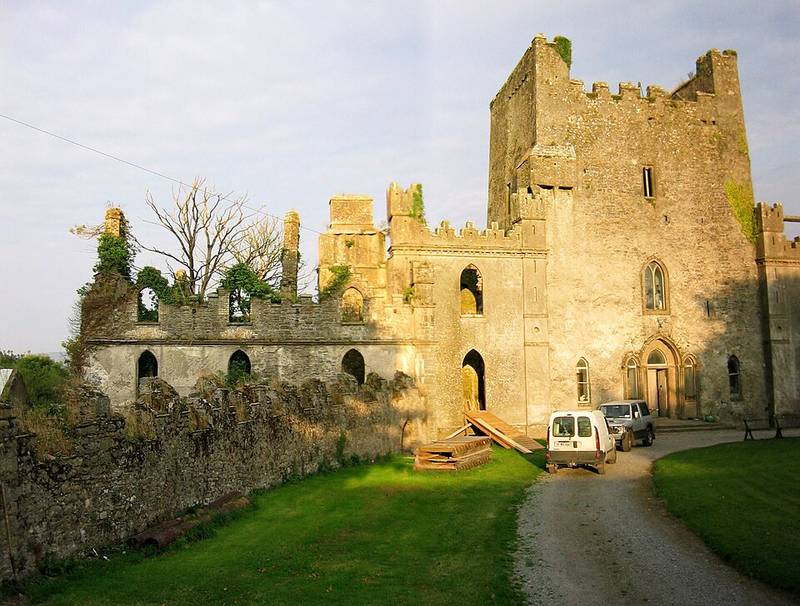
Leap Castle is the place most often called the most haunted castle in Ireland, and its history explains why. Built around 1250, it passed to the O’Carroll clan, whose internal rivalries produced its darkest chapter: in the 1530s, Teige O’Carroll killed his brother — a priest — at the altar of the castle chapel during Mass. The room has been known as the Bloody Chapel ever since.
A small chamber off the chapel, most likely built as a safe room for valuables, was reportedly used by the O’Carrolls as an oubliette: a pit where prisoners were dropped and left to die. When the castle was cleared in the early twentieth century, cartloads of human bones were found there. Sources disagree on the details — the discovery is dated 1909 or 1922, and the count runs as high as 150 — but the bones themselves are not in doubt, and they give the ghost stories an uncomfortable factual footing.
The castle’s most famous reported presence is the Elemental: a tall, lipless figure with glowing eyes, accompanied by a smell of decay. Here is the honest check: the Elemental enters the record through Mildred Darby, wife of a later owner, who held séances at Leap Castle in the early twentieth century and wrote about her encounters. It is a twentieth-century literary addition to a genuinely violent history, not a contemporary account — and the article marks it as such.
Can you visit? Leap Castle is a private home, restored by its owners. Visits are by arrangement only — do not plan a walk-up visit. Check before you go.
2. Loftus Hall, County Wexford
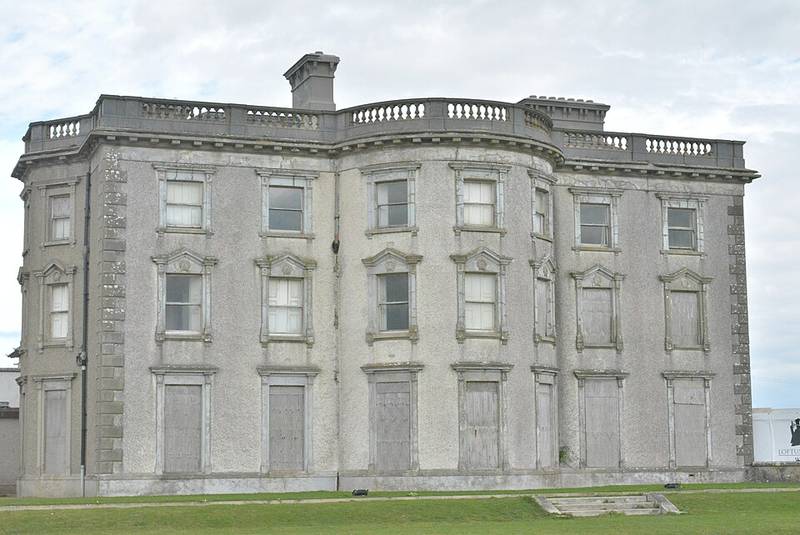
On the windswept Hook Peninsula stands Loftus Hall, often called Ireland’s most haunted house. Its central legend is one of the best-known ghost stories in the country: on a stormy night, a mysterious stranger sheltered with the Tottenham family. While the household played cards, young Anne Tottenham dropped a card, bent to pick it up, and saw that the stranger had cloven hooves instead of feet. He vanished through the roof in a ball of fire, leaving a hole that could never be properly repaired. Anne retreated to the Tapestry Room and died there, and her ghost is said to still wander the halls.
This entry carries two honest checks, and both matter. First, the legend’s dates do not agree across sources: the visit is dated 1666, the 1760s, and 1775 depending on which telling you read. Second — and more seriously — the mansion standing today was built in 1870 on the ruins of Redmond Hall. The house in the legend was levelled, so the current building postdates the tale it is famous for. The legend belongs to the site and the family, not to these walls.
Can you visit? No — not inside. Loftus Hall closed to the public in 2020 and was sold in 2021. The exterior, seen from the Hook Peninsula road, is the visit: an imposing, empty mansion on a lonely coast, which is honestly eerie enough on its own.
3. Kilmainham Gaol, Dublin
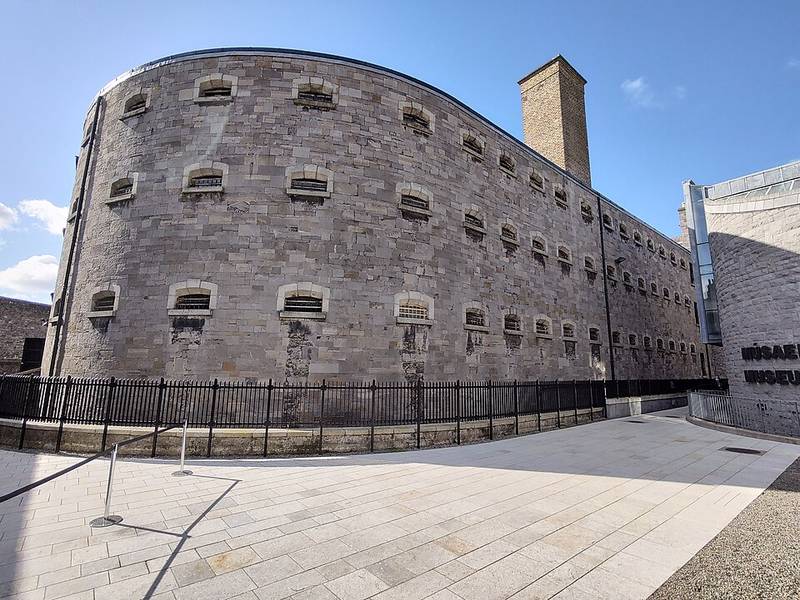
Kilmainham Gaol was Dublin’s county prison from 1796 to 1924, and its history is the history of Irish rebellion in stone. The leaders of the 1916 Easter Rising were executed in its Stonebreakers’ Yard — fourteen of the sixteen executed leaders died here, including Patrick Pearse and James Connolly. The gaol also held famine-era prisoners, Land War agitators, and Civil War prisoners in its final years.
The ghost reports here are thin and anecdotal: footsteps, whispers, a sense of being watched in the corridors. This entry does not need them. Kilmainham is on this list because few places in Ireland carry so much documented death in one building, and the guided tour — through the Victorian East Wing, the chapel, and the yard — lets you feel the weight of it without any supernatural claim at all.
Can you visit? Yes, as a museum, by guided tour only. Tours sell out, especially in summer and around Easter — book ahead.
4. The Hellfire Club, Montpelier Hill, Dublin
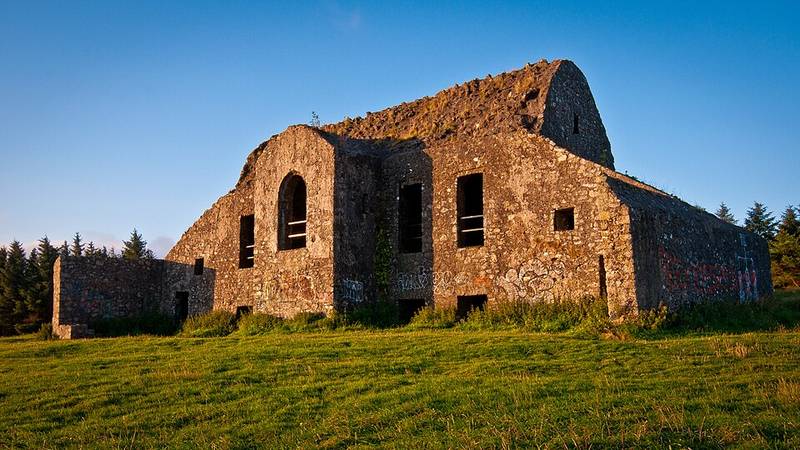
The ruin on the summit of Montpelier Hill, above Rathfarnham, is one of the most notorious haunted locations in Ireland — and the one where the popular story most needs correcting. The building was constructed around 1725 as a hunting lodge for William “Speaker” Conolly, then one of the richest men in Ireland. It was built on the site of a Neolithic passage tomb some 5,000 years old, and tradition says stone from the tomb’s cairn went into the lodge’s construction. When the roof blew off in a storm shortly after, folklore said the devil had done it in anger at the desecration. Conolly, undeterred, had a new roof put in place — this time of stone, keyed together like a bridge — which is why the ruin still has its strange, roofless-but-arched silhouette.
The Dublin Hellfire Club itself was founded around 1735 by Richard Parsons, 1st Earl of Rosse, and the painter James Worsdale: a society of wealthy young aristocrats in the fashionable English hellfire mould, mocking religion and propriety. Here is the correction: the club met mostly at the Eagle Tavern on Cork Hill in Dublin city, not primarily at the lodge. The lodge association is legend-heavy, and the popular tales of black masses and sacrifices at the ruin are folklore, not record.
What is documented is darker in a different way. Henry Barry, 4th Baron Barry of Santry, a club member, killed a porter named Laughlin Murphy in 1738. He was tried by the Irish House of Lords in 1739, sentenced to death, and then pardoned after heavy lobbying. No devil required — the aristocratic violence is on the record.
Can you visit? Yes, and it is free. The hill and the surrounding land are Coillte forestry, open to the public, and the ruin is a popular hillwalk with views over Dublin city. Wear proper shoes; the summit is exposed and the ruin itself is unguarded stone.
5. Malahide Castle, County Dublin
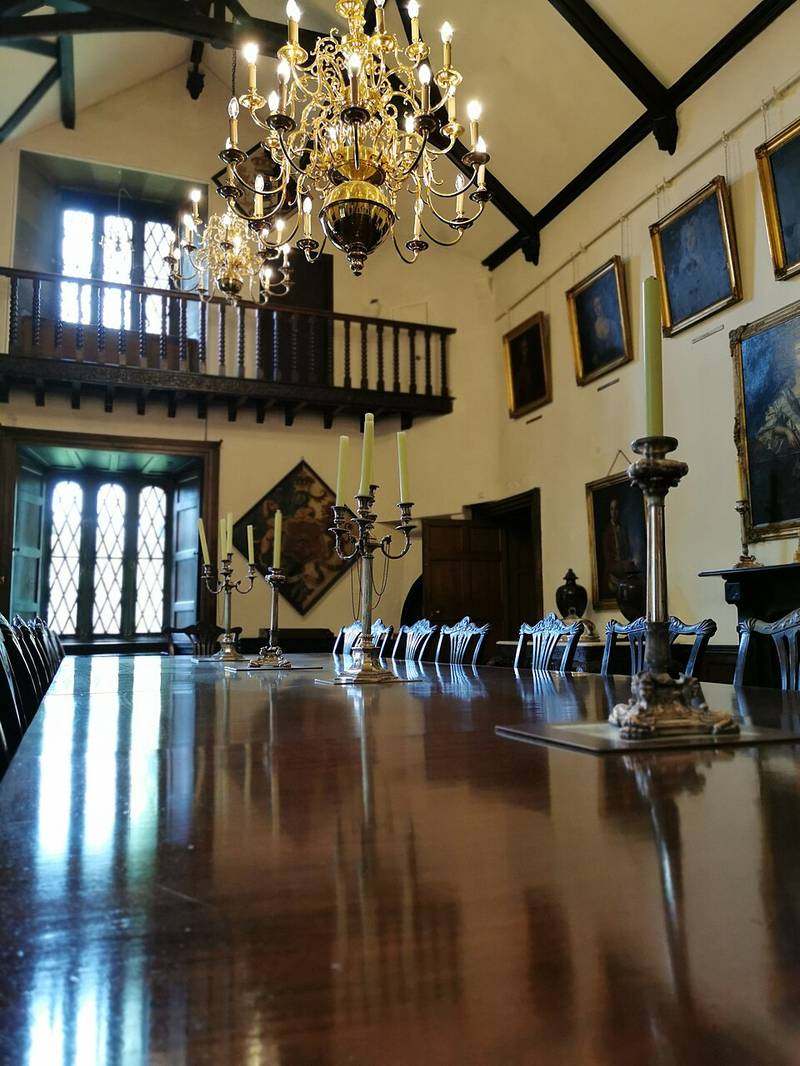
Malahide Castle, on Dublin’s north coast, was home to one family for nearly 800 years: the Talbots held it from 1185 until the last of the line died in 1973, with a single interruption when Cromwell handed it to Miles Corbet between 1649 and 1660. Eight centuries of continuous occupation in one building is rare anywhere; in Ireland it is extraordinary.
The castle’s best-known ghost is Puck, a jester said to have served the household in medieval times, who fell for a lady of the castle, died for it, and swore as he died to haunt the place. A second family tradition says fourteen Talbot cousins breakfasted together in the Great Hall on the morning of the Battle of the Boyne, 1 July 1690 — and none of them came home. Both stories come from family and popular tradition, not documents, and the article marks them that way. What is documented is the family’s tenure, the castle’s medieval core with Georgian refinements, and the 250-acre demesne with its walled Victorian gardens.
Can you visit? Yes, by guided tour daily, with the gardens walkable. Adult admission is around €16 — check before you go, as prices change seasonally.
6. Charles Fort, Kinsale, County Cork
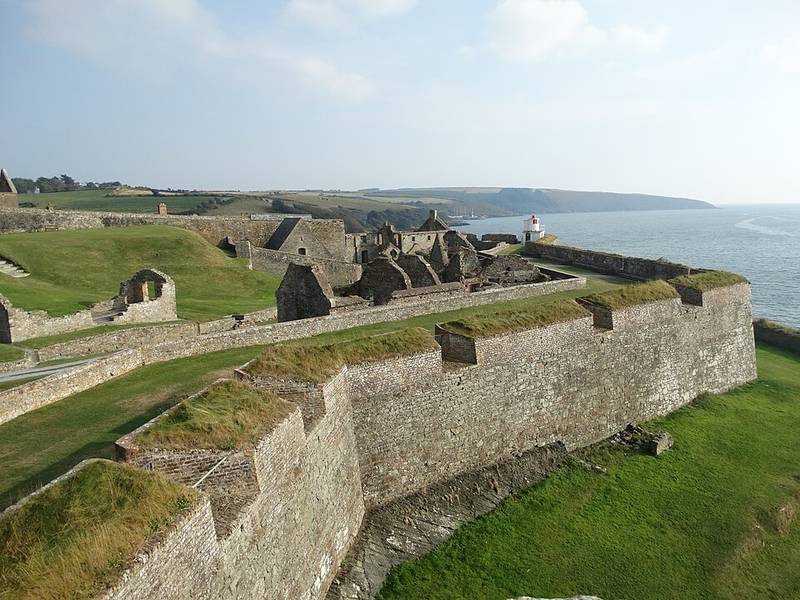
Charles Fort is one of the largest military installations in Ireland: a vast star-shaped fortress built between 1677 and 1682 to the design of William Robinson, guarding the entrance to Kinsale Harbour. Its design put almost everything into seaward defence — and that was its fatal weakness. In October 1690, during the Williamite War, forces under John Churchill, later Duke of Marlborough, put cannon on the high ground above the fort’s landward wall and fired dozens of cannonballs an hour for three days. After a thirteen-day siege, the garrison of roughly 1,200 men surrendered on honourable terms and marched out with their colours and arms.
The fort stayed an active barracks for over two centuries. In 1922, after the Anglo-Irish Treaty, retreating anti-Treaty forces burned the interior during the Civil War. It lay derelict until it was declared a National Monument in 1973, and the Office of Public Works has since stabilised the ramparts and rebuilt key structures.
Its ghost is the White Lady: Wilful Warrender, daughter of the fort’s governor, who — in the legend — married an officer, Sir Trevor Ashurst. On their wedding night he swapped places with a sentry; her father mistook him for a sleeping guard and shot him; Wilful threw herself from the ramparts in her wedding dress. Versions of the tale vary, and visitors still report her walking the walls. The siege, the surrender, and the burning are documented; the White Lady is reported folklore.
Can you visit? Yes, as an Office of Public Works site, adult admission around €5. Allow at least an hour. The ground is uneven with steep edges, and only assistance dogs are allowed.
7. Kilkenny: Alice Kyteler and the 1324 Witch Trial
The oldest story on this list is also the best documented — and the most sobering. In 1324, Dame Alice Kyteler, a wealthy Flemish-descended moneylender in Kilkenny, was accused of sorcery and heresy by Richard de Ledrede, Bishop of Ossory. Seven charges were brought: denying Christ and the Church, sacrificing animals at crossroads to a demon called Robin Artisson, mixing potions in the skull of a beheaded thief, and keeping a demon lover who appeared as a cat, a shaggy black dog, or a black man.
The case is documented in Ledrede’s own narrative, preserved in a manuscript later edited for the Camden Society — which is exactly why the honest check cuts so deep. The case began as an inheritance dispute: Alice’s stepchildren accused her of using sorcery to kill their fathers and strip the family of its money after she claimed her widow’s dower. Her servant, Petronilla de Meath, was flogged and tortured until she confessed and named her mistress. On 3 November 1324, Petronilla was burned at the stake in Kilkenny — the first person known to have been burned for heresy in Ireland. She was never tried in her own right. Alice herself fled to England and vanishes from the record.
The trial is documented. The sorcery is not. Petronilla’s death is the real horror of this entry, and no ghost story improves on it.
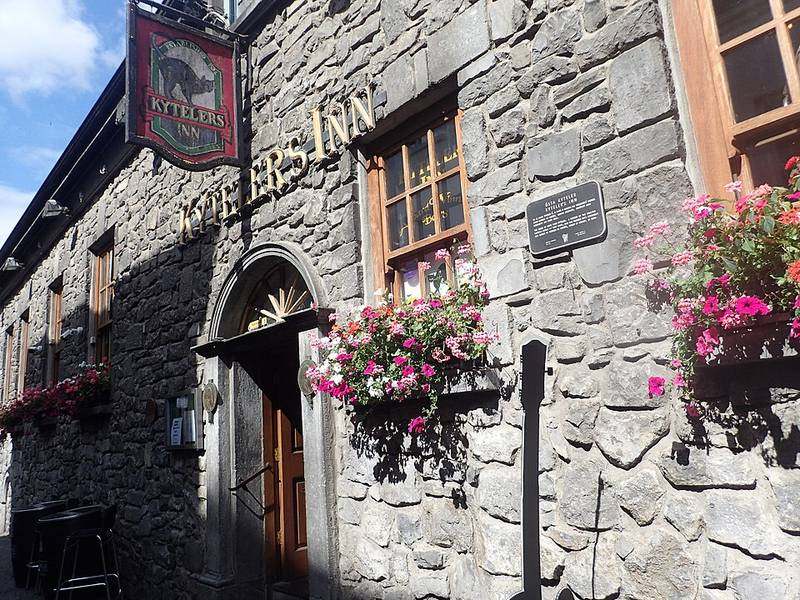
Can you visit? Kyteler’s Inn still trades in Kilkenny on the site associated with Alice’s home — you can eat and drink in it today. Kilkenny Castle and St Canice’s Cathedral, where Alice’s son was ordered to re-roof the church as penance, are a short walk away.
8. Crumlin Road Gaol, Belfast, Northern Ireland
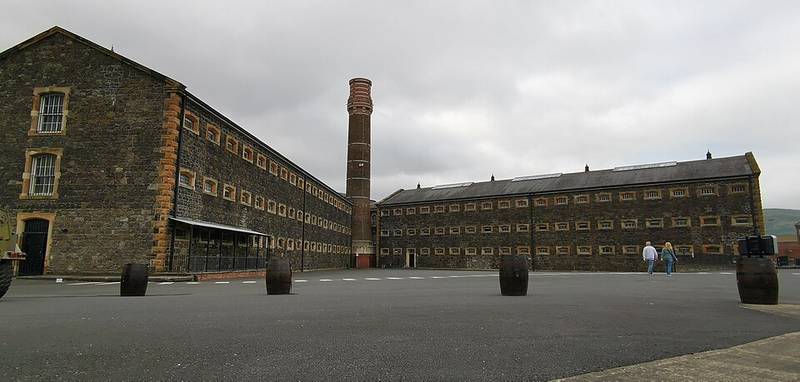
The northern anchor of this list is Belfast’s Victorian prison, built between 1843 and 1845 to the design of Charles Lanyon and modelled on London’s Pentonville Prison. It was the first prison in Ireland built for the Separate System: single cells, no contact between prisoners, silence as policy. Over 150 years it held more than 25,000 prisoners — men, women, and children as young as thirteen, imprisoned for stealing food and clothing — alongside suffragettes and political prisoners from the War of Independence and the Troubles.
Seventeen men were executed here between 1854 and 1961: the first, Robert Henry O’Neill, on 21 June 1854; the last, Robert McGladdery, on 20 December 1961. The execution chamber was built in C Wing in 1901, and executed prisoners were buried in unmarked graves within the grounds. The gaol closed on 31 March 1996 and reopened as a museum in 2012; the tour takes in the tunnel to the courthouse, the Governor’s office, the cells, the execution chamber, and the graveyard. Evening ghost tours exist, but as with Kilmainham, the documented history carries this entry on its own.
A note on geography, stated plainly: Belfast is in Northern Ireland. This list covers the island of Ireland, and the gaol is labelled as such — no political framing beyond that.
Can you visit? Yes, as a museum, self-guided in about 60–90 minutes. Adult admission is around £18.50; booking online at least 24 hours ahead is cheaper. Check before you go.
Planning the Route
Three of the eight sit in or near Dublin — Kilmainham Gaol, the Hellfire Club, and Malahide Castle — and make a single dark weekend on their own. Leap Castle and Kilkenny pair well on a midlands run; Loftus Hall and Charles Fort anchor the south coast; Crumlin Road Gaol is the reason to take the trip north. If you only have one day, Dublin is the answer. If you have a week, the island is.
And a final Atlas note: every ghost in this article is reported, every execution, siege, trial, and burning is documented. That distinction is the whole point. Ireland’s real history is darker than its folklore — it does not need embellishing.
Frequently Asked Questions
What is the most haunted place in Ireland?
It depends on the measure. Leap Castle is the most cited haunted castle, Loftus Hall the most cited haunted house — but Loftus Hall’s present building postdates its legend, and Leap’s Elemental comes from twentieth-century séance writings. The honest answer is that no ranking survives scrutiny; the eight places above are the ones where the history is real even when the ghost is not.
Can you visit Loftus Hall?
Not inside. It closed to the public in 2020 and was sold in 2021. You can view the exterior from the Hook Peninsula road, but do not plan a tour.
Did the Hellfire Club actually meet at the lodge on Montpelier Hill?
Mostly no. The Dublin Hellfire Club met chiefly at the Eagle Tavern on Cork Hill in the city. The lodge is the atmospheric ruin the legend attached itself to — and it is free to walk to, which makes it worth the climb regardless.
Which of these places are free to visit?
The Hellfire Club hillwalk is free, on public Coillte land. Everything else on this list charges admission or, in Leap Castle’s case, requires arrangement. Kilkenny’s streets and the exterior of Kyteler’s Inn cost nothing to walk past.
When is the best time to visit Ireland’s haunted places?
Shoulder seasons — late spring and early autumn — for smaller tour groups and open sites without summer queues. Samhain week itself, around 31 October, is the atmospheric peak but also the busiest, and several sites run special events that book out early.
Keep exploring
The Paris Catacombs: History, Hauntings & How to Visit
Twenty metres beneath the streets of Paris, in tunnels the city dug to build itself, lie the bones of more than six million Parisians — stacked…
Read story →
8 Haunted Places in Transylvania (Historic Guide)
Transylvania is the most famous haunted address on earth — and the place where the Atlas rule matters most. The Dracula story everyone arrives with is,…
Read story →
8 Haunted Places in London (Historic Guide)
London has been accumulating ghosts longer than almost any city on earth — and, being London, it has also been accumulating the paperwork. Coronations and executions,…
Read story →