12 Haunted Places in Oregon (Historic Guide)
Oregon keeps its ghosts the way it keeps its rain: quietly, constantly, and without much fuss about it. This is a state built on hard journeys…
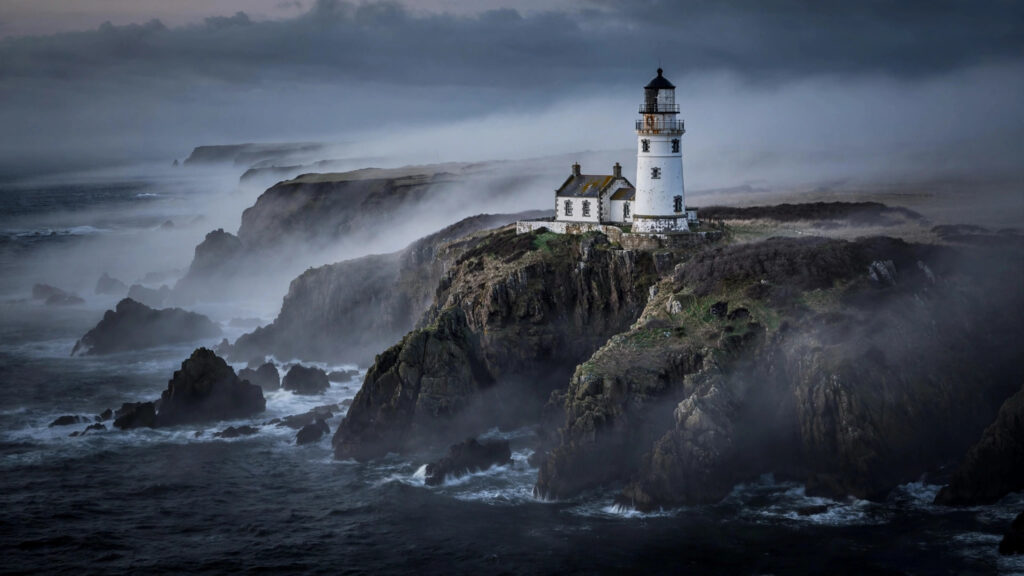
Reader’s note: supernatural accounts are presented as folklore and reported experiences, not established fact.
Oregon keeps its ghosts the way it keeps its rain: quietly, constantly, and without much fuss about it. This is a state built on hard journeys — the Oregon Trail, the timber camps, the gold rush towns that boomed and went hollow — and everywhere the trail passed, something seems to have stayed behind. Portland alone was once called one of the most dangerous port cities in the world, and in 2012 USA Today named it one of the ten most haunted cities in America.
That’s the lens we bring to all of it at The Haunted Atlas. A haunted place earns its reputation when the folklore sits on top of something real — a building with a documented past, a town with a recorded tragedy, a site where history lingers. Below are twelve Oregon locations with the history to back up the haunting, from a lighthouse keeper’s grieving wife to a gold-rush hotel that never quite checked its guests out. Supernatural accounts are presented as folklore and reported experiences, not established fact.
Pittock Mansion — Portland
High in the West Hills at 3229 NW Pittock Dr, the 23-room French Renaissance mansion Henry Pittock built for his wife Georgiana in 1914 is Portland’s grandest house — and, many say, its most graciously haunted. Henry, the London-born publisher who built The Oregonian into a daily powerhouse. Georgiana died in the mansion in June 1918, and Henry followed in January 1919, just a few years after the mansion’s completion. The family held the house until 1958; after the Columbus Day Storm of 1962 nearly doomed it to demolition, Portland citizens raised the funds to save it, and the city opened it as a museum in 1965.
Since then, visitors and staff have reported the scent of English roses — Georgiana’s favorite bloom — drifting through the upper rooms, a portrait of Henry that reportedly moved between rooms until it was tied down, phantom footsteps, and the sounds of a shovel striking earth on the north grounds, attributed to the family’s longtime groundskeeper. The apparitions, when seen, are described as peaceful: gracious hosts still receiving guests in the home they loved. The mansion is open to the public as a museum, Thursday through Monday.
The Shanghai Tunnels — Portland’s Old Town
Beneath Old Town and Chinatown lies Portland’s most infamous legend: a warren of tunnels and connected basements, built mostly in the 1850s–1890s for moving goods and weathering floods, said to have served a far darker trade. Between roughly 1850 and 1941, Portland earned a worldwide reputation as a hub of “shanghaiing” — sailors and travelers drugged or knocked unconscious in saloons, dropped through trapdoors, held in makeshift cells, and sold to sea captains, waking up days later bound for Asia with no way home.
Here’s where the Atlas lens matters: the tunnels are real, and shanghaiing was a real and ruthless form of human trafficking that plagued every West Coast port. But modern historians agree the dramatic version — a miles-long underground kidnapping highway feeding ships at the waterfront — is largely myth, amplified by newspaper stories and ghost tours from the 1930s onward. No contemporary maps or court records support it. That hasn’t stopped the reports: tour guides and visitors in the surviving section beneath Old Town Pizza & Brewing (the former Merchant Hotel) describe whispers, sudden cold spots, and figures in period clothing vanishing around corners. Walk it and decide for yourself where history ends and legend begins.
McMenamins Edgefield — Troutdale
At 2126 SW Halsey St in Troutdale, the rambling lodge and gardens of McMenamins Edgefield look like pure Pacific Northwest charm — winery, brewery, soaking pool, concert lawn. The history underneath is heavier. Built in 1911 as the Multnomah County Poor Farm, the 74-acre property housed Portland’s destitute through the Depression, then became a nursing home, a tuberculosis sanitarium, and a home for emotionally disturbed children before sitting abandoned in the 1980s. Thousands of hard lives passed through these buildings; many ended here, in unmarked graves on the grounds.
Guests and staff report disembodied voices and crying in the halls, a woman in period clothing who vanishes when approached, unseen hands pressing against shoulders in empty corridors — and a ghost dog said to wake sleepers with a cold snout to the face. The front desk keeps a ghost log of guest experiences, and Room 215 is the most requested in the house for its concentration of activity. During renovations, workers found animal bones arranged in a pentagram-like pattern in one room — unexplained, and not helping the property’s reputation.
White Eagle Saloon — Portland
The 1905 saloon at 836 N Russell St in North Portland has barely changed its purpose in 120 years: a workingman’s bar, now with live music nightly and eleven spare guest rooms upstairs. Polish immigrants Barney Soboleski and William Hryszko built it for the industrial district’s laborers and sailors, and legend holds it also served as a brothel and an opium den, with a basement tunnel tied to the Shanghai trade.
The hauntings are specific and personal. Rose, a young woman said to have been a “working girl” murdered by a jealous lover in the 1920s, is spotted in the upstairs rooms — Room 2 in particular — and heard crying in the halls. Sam, a pre-Prohibition bartender and cook raised by the owners, plays pranks: flung condiments, moved objects, shoves on the stairs. Guests report cold hands touching them, being unable to rise from bed, and one patron was inexplicably locked in the women’s bathroom for fifteen minutes — in a door with no lock. The saloon keeps a ghost blog logging it all.
Heceta Head Lighthouse — Oregon Coast
Completed in 1894 on a dramatic headland between Florence and Yachats, Heceta Head is among the most photographed lighthouses on the West Coast — and home to Oregon’s most famous lighthouse ghost. The keeper’s house, a Queen Anne duplex that housed the assistant keepers’ families, is now a six-room bed-and-breakfast. Its resident is known as Rue.
The name came from a Ouija board session: Lane Community College students, who leased the house as a satellite campus for nearly thirty years, spelled out R-U-E when they asked the spirit’s name. Legend says Rue was a keeper’s wife who lost a daughter at the station — some versions say to drowning — and returned after death to search for her. Guests describe a figure in a long gray dress moving through rooms, wet footprints on wooden floors, furniture adjusted and bedsheets smoothed while someone sleeps. In one oft-told incident, a keeper fixing a broken attic window saw a woman’s reflection in Victorian dress behind him, fled — and the crew later found the shattered glass neatly swept into a pile by the attic door. The lighthouse’s volunteer historian has never found a keeper’s wife by that name in the records, which only deepens the question.
Geiser Grand Hotel — Baker City
Built in 1889 as the Hotel Warshauer and renamed when Albert Geiser bought it in 1900, the Geiser Grand was the crown of Baker City’s gold-rush boom — “The Queen of the Mines,” all stained glass, mahogany, and chandeliers. After decades of decline it was restored in the 1990s, and it operates today as a working hotel that leans into its haunted reputation with ghost tours and Halloween events.
The most famous resident is the Lady in Blue — Annabelle, seen gliding up and down the grand staircase in a blue gown. Other reports include a 1920s saloon dancer, unexplained piano music from empty rooms, footsteps with no source on the upper floors, cold drafts in still air, and shadowy figures in the ballroom. Skeptics note, fairly, that a 135-year-old building makes its own noises — but the consistency of the staircase sightings across unrelated guests keeps the legend firmly on the books.
Hot Lake Hotel — La Grande
Ten miles outside La Grande in Union County, the brick bulk of the Hot Lake Hotel has lived more lives than almost any building in Oregon. The hot springs drew Native American tribes as neutral healing ground, then Oregon Trail families in the 1840s. The original hotel went up in 1864; in 1917 Dr. W.T. Phy bought it, built a hospital and x-ray facility on the third floor, and rebranded it the Hot Lake Sanatorium — the “Mayo Clinic of the West,” where the Mayo brothers themselves once visited. A 1934 fire halved the building. It served as a WWII flight school and nurses’ training center, then a nursing home and asylum until the mid-1970s, then sat abandoned for fifteen years.
The hauntings read like a census of every era: vacationers, a gardener said to have died by suicide on the grounds, nurses and patients from the sanatorium years, asylum residents. Footsteps and voices in the old hospital wing, screams from the surgery room, rocking chairs moving on their own, and a piano — said to have belonged to Robert E. Lee’s wife — playing itself on the third floor. The property was featured on ABC’s “The Scariest Places on Earth” in 2001. Restored in the 2000s, it operates today as a hotel, spa, and museum of its own strange past.
The Oregon Vortex — Gold Hill
Northwest of Medford in Gold Hill, a roadside attraction has been bending visitors’ sense of reality since 1930. The story: the Old Grey Eagle Mining Company built a gold assay office here in 1904; in the mid-1910s it slid off its foundation and came to rest at a bizarre angle. Scottish mining engineer John Litster bought the property, ran thousands of experiments, and opened it to the public as the Oregon Vortex and House of Mystery — a half-acre where people appear to grow or shrink as they switch places, balls roll uphill, brooms stand on end, and compasses spin.
Scientists call it a masterclass in forced perspective and leveling illusions. Local legend calls the land “forbidden ground” that Native tribes and their horses refused to enter. And some visitors insist the strangeness goes further: ghostly distortions in photographs, invisible hands tugging at sleeves, and the apparition of Litster himself, seen leaning against the House of Mystery. Whether it’s physics, folklore, or something in between, it’s one of Oregon’s oldest roadside attractions — and still reliably strange.
Lone Fir Cemetery — Portland
In southeast Portland, behind an iron fence on a quiet block, lies the final resting place of more than 25,000 souls. Established in 1855 on what was then James Stephens’ farm, Lone Fir became the city’s official cemetery after steamboat owner Colburn Barrell set aside ten acres — first called Mount Crawford — to bury the 24 victims of the Gazelle explosion of 1854, the worst steamboat disaster in Oregon history. It holds Portland’s pioneers, Civil War dead beneath an 1903 Soldiers’ Monument, hundreds of Chinese immigrants in Block 14, and patients of the Oregon Hospital for the Insane, whose remains were rediscovered by archaeologists in the 2000s.
Visitors report misty figures crossing the grounds in daylight as well as after dark, a young woman in a red dress strolling the paths, the feeling of being watched among the towering firs, and brushes from invisible hands. The Friends of Lone Fir run historical tours, including Halloween walks — the rare haunt where the history is the attraction and the ghosts are the bonus.
The Heathman Hotel — Portland
Opened in December 1927 as the New Heathman Hotel, the ten-story Italian Renaissance building at 1001 SW Broadway anchored Portland’s theater district through Prohibition, decline, and a $16 million 1980s restoration. Its ghost story is architectural: rooms ending in “03” — 703, 803, 1003 — are the reported hotspots. Guests describe cold spots, towels found soiled in empty rooms, furniture rearranged overnight, full water glasses emptied, and a hazy face watching from dark corners.
The lore traces to a tragedy: a distraught man is said to have jumped from room 1003, haunting every room he passed on the way down, with room 703 at the center of the activity. A psychic once described seeing a figure at the foot of a bed in 803. There’s also the weeping woman reported in room 510, identity unknown. The hotel itself is now lighter and more contemporary after a 2018 renovation — but the stories haven’t checked out.
The Bagdad Theater — Portland
Universal Studios built the Bagdad in 1927 as an exotic movie palace on SE Hawthorne, all Moorish arches and ornate plaster; it hosted vaudeville, silent films, and the premiere of “One Flew Over the Cuckoo’s Nest.” McMenamins bought it around 1990, and it still shows first-run films — with pizza and a pint. It’s also, staff insist, still showing its ghosts.
The most cited is a maintenance man said to have died by suicide in the building, glimpsed crossing in front of the screen or in the upstairs lobby. Others report a mischievous presence tampering with projection equipment mid-show, crying from the balcony bathroom, unexplained cold spots, and long-dead ushers who never left their posts. McMenamins leans in with seasonal Bagdad Ghost Tours each October, walking guests through the spookier side of nearly a century of audiences.
Columbia Gorge Hotel — Hood River
Simon Benson — the lumber magnate behind the Columbia River Highway — built his “Waldorf of the West” above the gorge in 1921, a Mission-style retreat that hosted Presidents Roosevelt and Coolidge, Shirley Temple, and Rudolph Valentino. The Depression ended the glamour; in 1952 the Neighbors of Woodcraft bought it and ran it as a retirement home for 25 years. Restored and reopened as a hotel in 1979, it operates today as a luxury inn and wedding venue beside the 207-foot Wah Gwin Gwin Falls.
The retirement-home decades left their mark on the lore: phantom cigar smoke in empty corridors, attributed to residents who died on the property. Room 330 is the famous one — a Lady in White said to have fallen from a balcony, still seen in the room and on the grounds. Guests report a small boy near the old pool site in the former ballroom, windows opening and closing on their own, footsteps in empty halls, and rooms found inexplicably barricaded from the inside. Third-floor guests have heard stomping from above — then learned, in the morning, that there is no fourth floor.
Frequently Asked Questions
What is the most haunted place in Oregon?
Portland’s Shanghai Tunnels get the most votes for the most infamous, but Pittock Mansion is the most consistently reported single building — and Heceta Head Lighthouse’s Grey Lady is the state’s most famous individual ghost. It depends whether you want underground legend, grand-house haunting, or coastal tragedy.
Can you visit the Shanghai Tunnels?
Yes. A surviving section is open for guided tours beneath Old Town Pizza & Brewing (the former Merchant Hotel) in Portland’s Old Town. Many other passages were sealed during World War II or have collapsed, so the tour covers only a portion of what once existed.
Is the Heceta Head Lighthouse open to the public?
The grounds are open year-round during park hours, and the tower interior offers seasonal tours. The keeper’s house operates as a six-room bed-and-breakfast — the one Rue is said to haunt — so you can sleep in Oregon’s most famous haunted lighthouse if you book ahead.
Which Oregon haunted hotels can you actually stay in?
Several. The Geiser Grand in Baker City, Hot Lake Hotel near La Grande, the Heathman Hotel and White Eagle Saloon in Portland, McMenamins Edgefield in Troutdale, and the Columbia Gorge Hotel in Hood River all take overnight guests. Edgefield even keeps a ghost log at the front desk.
Are the ghost stories at these places historically documented?
The buildings and their histories are real and documented — that’s the point. The paranormal accounts are reported experiences and local folklore, which is exactly how we present them. The Shanghai Tunnels are the best example: real tunnels, real history of shanghaiing as a crime, but the dramatic “underground kidnapping highway” version is largely myth according to historians.
When is the best time to explore haunted Oregon?
October, naturally — the Bagdad Theater runs ghost tours, and the whole state leans into the season. But the coast in winter is arguably more atmospheric: Heceta Head in a storm, with the light sweeping the black water, needs no ghost to raise the hair on your neck.
Is it true USA Today named Portland one of the most haunted cities in America?
Yes — in 2012, USA Today included Portland among its ten most haunted cities in the United States, citing the Shanghai Tunnels, Pittock Mansion, and the city’s rough-and-tumble port history.
Oregon doesn’t advertise its ghosts. They surface anyway — in a lighthouse logbook, a hotel’s front-desk journal, a theater’s October tour schedule, a cemetery’s Halloween walk. Twelve places, twelve histories, and the same quiet truth running underneath all of them: where history lingers, something lingers with it.
Keep exploring
8 Haunted Hotels in Oregon You Can Actually Book (Historic Guide)
Oregon's ghost stories are easy to visit and hard to sleep in — in the best way. This list is different from a roundup of haunted…
Read story →
8 Haunted Ghost Towns of the Pacific Northwest
The Pacific Northwest is studded with towns that boomed on gold, coal, and wool — and died when the ore ran out, the railroad moved on,…
Read story →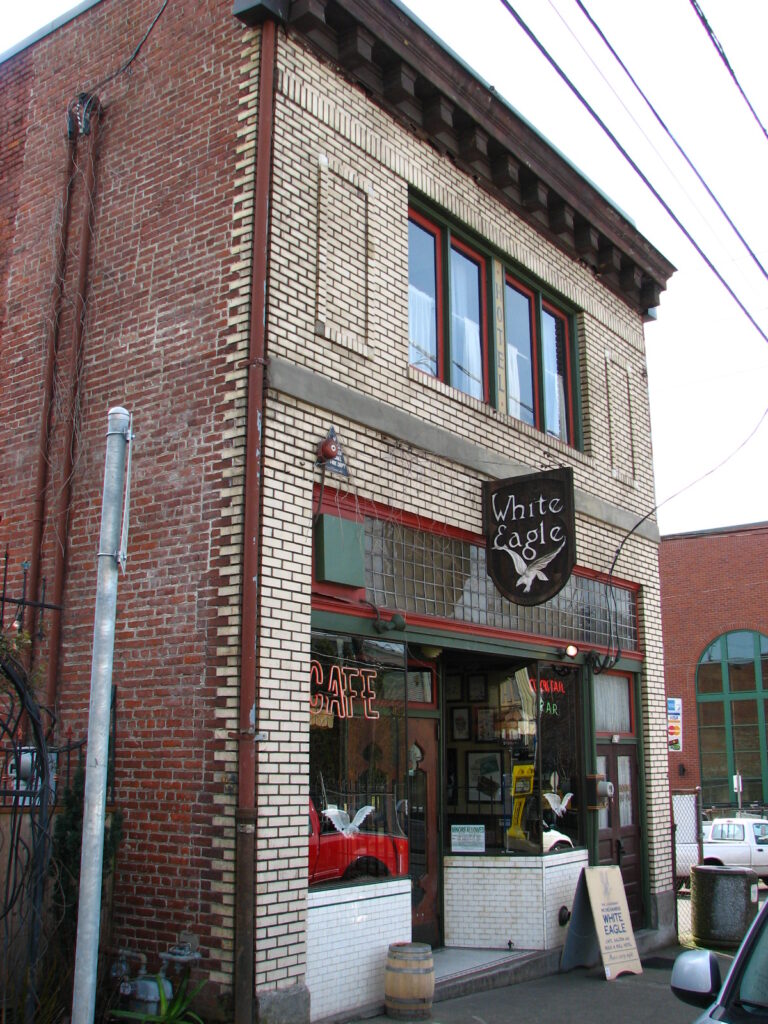
Haunted Portland Walking Tour: 8 Stops (Self-Guided)
Portland keeps its ghosts close to the sidewalk. In about three miles of flat downtown walking — from the old shanghaiing waterfront of Old Town to…
Read story →