8 Haunted Places in London (Historic Guide)
London has been accumulating ghosts longer than almost any city on earth — and, being London, it has also been accumulating the paperwork. Coronations and executions,…
Reader’s note: supernatural accounts are presented as folklore and reported experiences, not established fact.
London has been accumulating ghosts longer than almost any city on earth — and, being London, it has also been accumulating the paperwork. Coronations and executions, a ghost photograph examined by Kodak, a vampire panic with a date, a newspaper, and a mob. This is our second international investigation, following Edinburgh, and the Atlas rules hold here as everywhere: documented history first, reported folklore clearly labeled, and the famous legends checked against the record. Two of the best stories in this piece are ones where the honest version — a media-manufactured panic and a photograph nobody could fake — turns out more interesting than the myth.
Eight places, each with a file that contains at least one dated, named, checkable item. That bar eliminated some famous names — the Viaduct Tavern, Bleeding Heart Yard, and the Clink among them, whose ghost stories circulate only as tour-company copy with no named source behind them. What survived is below.
1. The Tower of London
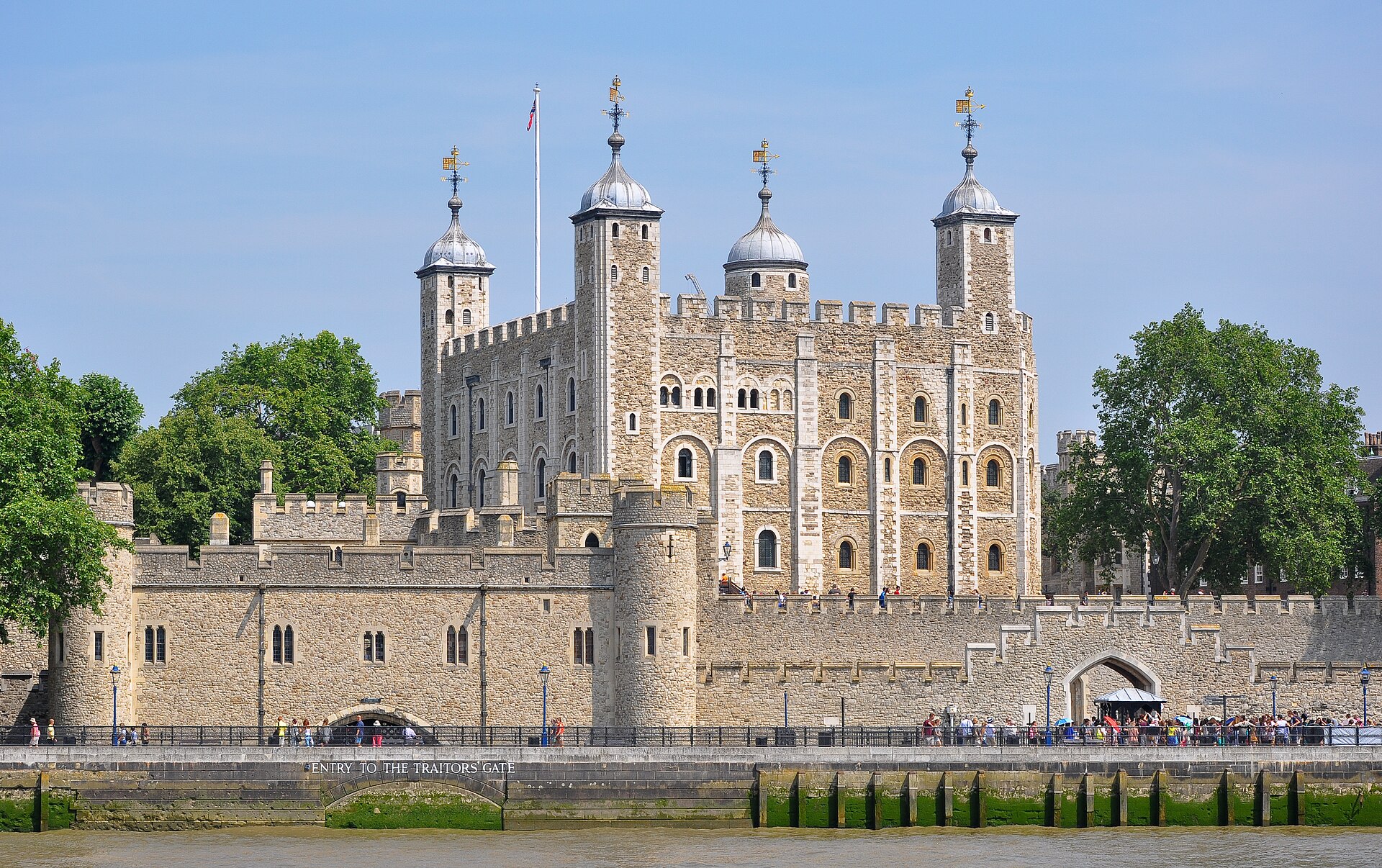
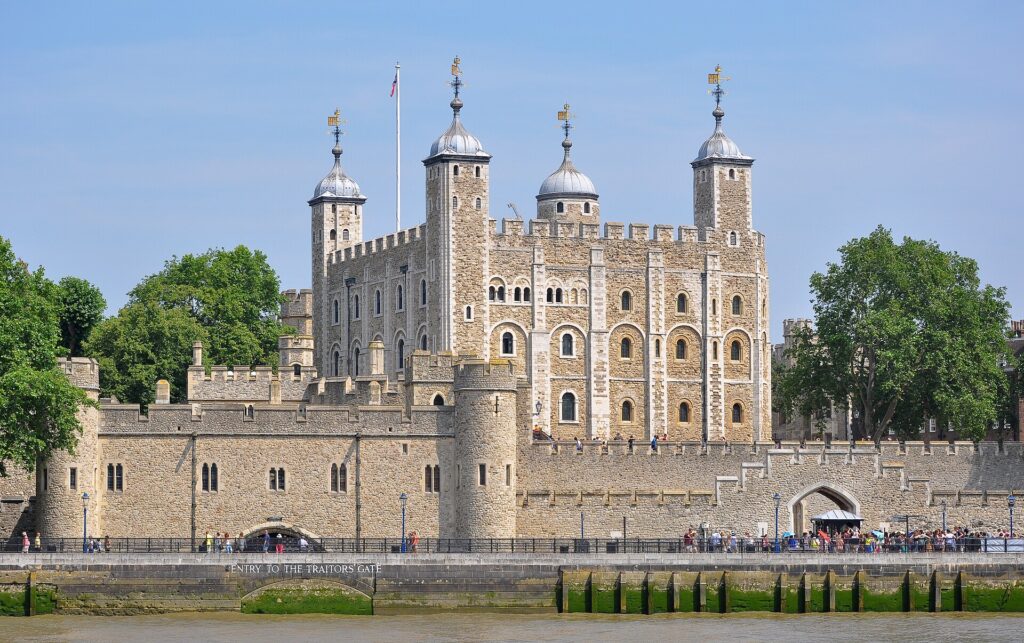
Founded by William the Conqueror — first fortifications in 1066, the White Tower begun around 1078 — the Tower has served for nine centuries as royal palace, fortress, armoury, menagerie, and state prison. It now houses the Crown Jewels, is guarded by the Yeoman Warders, and is a UNESCO World Heritage Site. Executions inside the walls were rare and private: just seven people were beheaded on Tower Green, among them Anne Boleyn (19 May 1536), Lady Jane Grey (12 February 1554), and Margaret Pole, Countess of Salisbury (1541).
The Tower’s most-reported ghost is Anne Boleyn, seen near Tower Green and in the Chapel Royal of St Peter ad Vincula, where she was buried in an arrow chest in 1536 and formally reinterred during the chapel’s Victorian restoration of 1876–77. The canonical accounts are specific: a Captain of the Guard who looked through the chapel window at night and reported a procession of Tudor-dressed knights and ladies, led by a figure resembling Anne, moving toward the altar and fading; and the 1864 sentry, a soldier of the 60th Rifles who challenged a white figure three times, lunged with his bayonet — which passed through it — and fainted, then was acquitted at his court-martial for sleeping on duty after other soldiers corroborated the figure. The Princes in the Tower — Edward V, 12, and Richard of York, 9, lodged here in 1483 and never reliably seen again — are reported in the Bloody Tower as two small figures in white nightgowns who fade into the walls. Lady Jane Grey‘s figure is reported on the battlements, sometimes on the anniversary of her execution. And the best modern account is on the record: Major General Geoffrey Field, Resident Governor from 1994 to 2006, recalled that shortly after arriving, his wife Janice was making a bed in the Queen’s House’s Lennox Room when she felt “a violent push in her back which propelled her right out of the room” — attributed to Arbella Stuart, who died a prisoner in the Tower in 1615. The Fields were told every resident had experienced something in that room.
The honest checks, plural. First: for a woman executed in 1536, Anne Boleyn’s paper trail starts curiously late — the famous reports cluster from the 1860s onward, exactly when the Tower was being restored, its burials excavated and identified, and mass tourism arriving. The legend is real; its documentation is Victorian. Second: the Princes’ bones are unproven. In 1674 workmen found a chest of two children’s bones under a White Tower staircase; Charles II had them reburied in Westminster Abbey as the Princes. A 1933 examination found them consistent with the Princes’ ages — but identity and cause of death have never been proven, and modern DNA testing has been declined. The bones may be theirs. The record cannot say so.
Visit: Ticketed through Historic Royal Palaces, open daily except 24–26 December; book ahead. Tower Green and the Chapel Royal are on the standard visit. The Queen’s House is the Resident Governor’s private home — the Arbella Stuart story happens behind closed doors.
2. Westminster Abbey
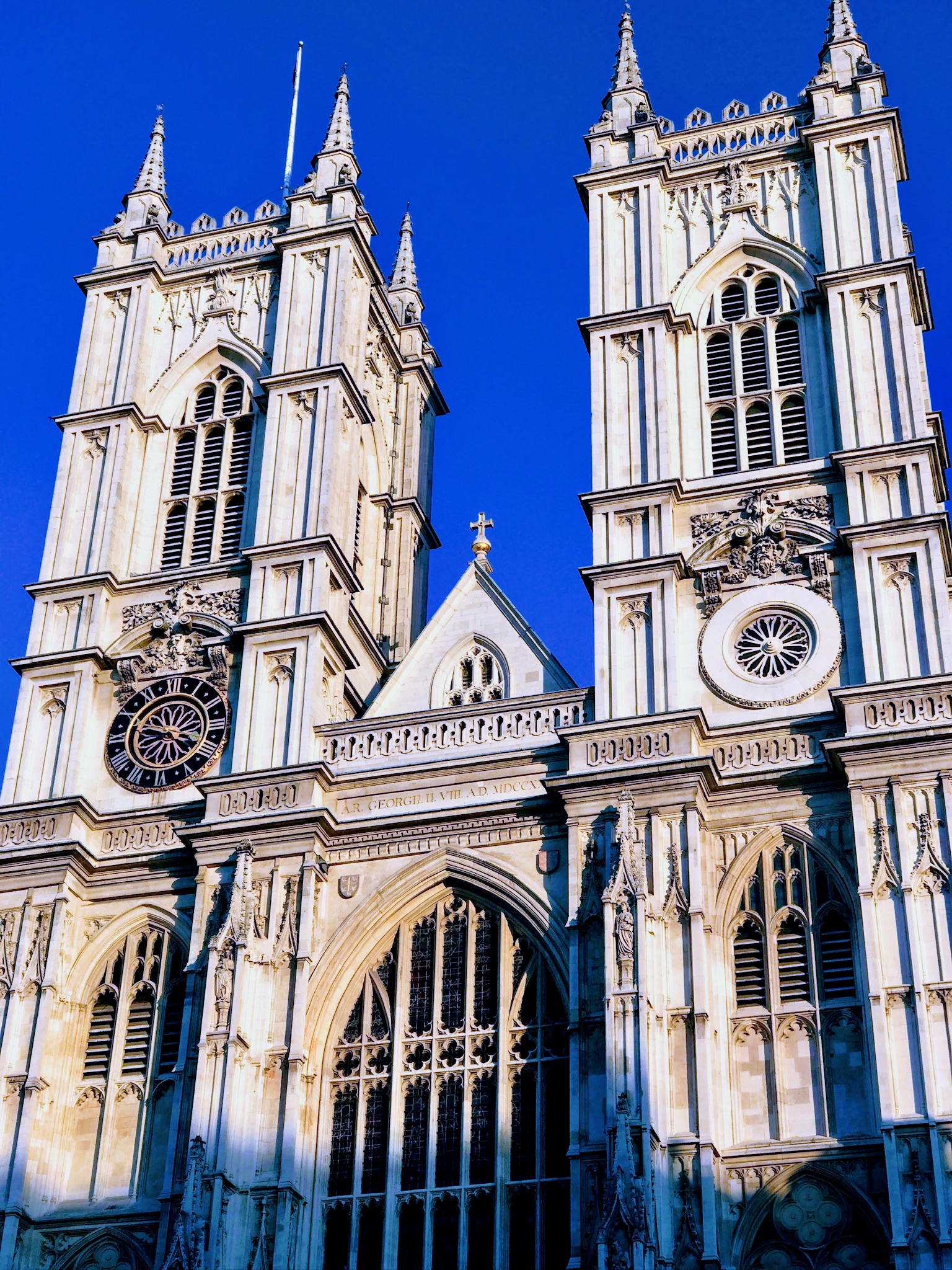
A Benedictine abbey founded in the 10th century on Thorney Island; the present Gothic church was begun by Henry III in 1245. It has hosted every coronation since 1066, holds seventeen royal burials, and contains the graves or memorials of more than 3,300 people — Poets’ Corner, scientists, statesmen. Just inside the west door lies the Grave of the Unknown Warrior, an unidentified British soldier buried on 11 November 1920 in soil from France: the one grave in the Abbey that no one, royalty included, walks over.
And now an honesty this list owes you: the Abbey’s ghost lore is the thinnest in this article. Its best-known ghost, “Father Benedictus” — a tall Benedictine monk said to appear in the cloisters around 5–6 p.m., solid enough to converse with visitors before backing into a wall — circulates through 20th-century ghost-guide compilations. The set-piece accounts (two ladies in 1900, two lost American visitors in 1932) come without checkable names, and no Abbey record identifies any monk “Benedictus.” A lone soldier is said to stand, head bowed, beside the Unknown Warrior’s grave after closing — pure anecdote. John Bradshaw, who presided over the trial of Charles I, is said to walk the upper levels — though Bradshaw’s documented story needs no ghost: buried in the Abbey in 1659, he was exhumed in 1661 and posthumously executed, his corpse hanged at Tyburn. A documented desecration stranger than any haunting.
The Abbey earns its place on what is documented and unmatched — 3,300 burials, the Warrior, and that quiet link back to our first entry: the bones reburied here in 1678 as the Princes in the Tower rest in this building. Two halves of the same unsolved mystery, a mile apart.
Visit: Ticketed sightseeing Monday–Saturday (it is a working church; Sundays are worship only). The Unknown Warrior’s grave and the cloisters are on the standard visit.
3. Hampton Court Palace
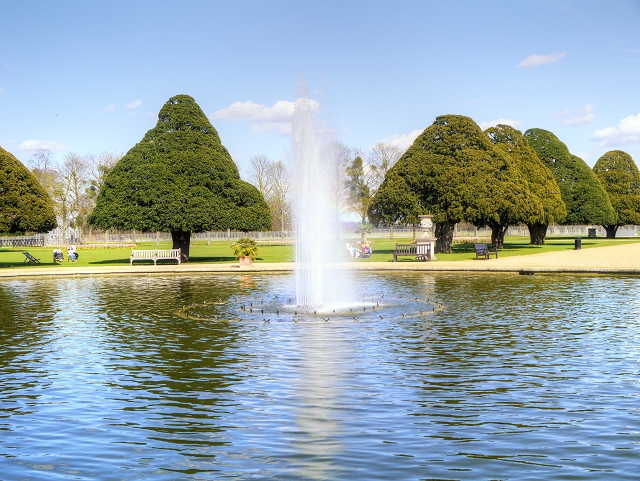
Begun in 1514 by Cardinal Thomas Wolsey, Henry VIII’s chief minister; when Wolsey fell, the palace passed to the King and became a principal Tudor residence, later joined by Christopher Wren’s baroque rebuilding for William III and Mary II. Three of its ghosts belong to documented Tudor lives at the palace — and one belongs to a security camera.
Catherine Howard, Henry’s fifth wife, was held under house arrest here in autumn 1541. The tradition holds that she broke free of her guards and ran screaming down the gallery toward the Chapel Royal, begging the King for mercy, before being dragged back; she was executed at the Tower in February 1542. Her ghost is said to repeat the run, in white, down what the palace now officially calls the Haunted Gallery. The legend is old — an 1897 book on the palace already records her “dressed in white and floating down one of the galleries uttering unearthly shrieks” — and the palace’s own custodians still log reports: in 1999, two women on separate tours fainted in exactly the same spot in the Haunted Gallery on the same day, a story Historic Royal Palaces itself tells; curator Lucy Worsley, a self-described skeptic, has admitted feeling “a feeling of coldness” in the room. Jane Seymour, who died at Hampton Court on 24 October 1537, twelve days after giving birth to Edward VI, is said to descend the Silverstick Stairs by candlelight on the anniversary of the birth. And the Grey Lady, Dame Sybil Penn — nurse to Edward VI, servant to four monarchs, who died of smallpox in 1562 after nursing Elizabeth I through it — is Hampton Court’s most prolific ghost: when her tomb was disturbed in 1829, a whirring like a spinning wheel began in her old rooms, and workmen tracing the sound reportedly found a bricked-up chamber containing an antique spinning wheel.
Then there is “Skeletor.” In winter 2003, a fire door near Clock Court was found flung open on three consecutive occasions after security alarms; on the second night’s CCTV, a tall, gaunt figure in period dress appears to pull the doors shut. The press named it Skeletor. Palace spokeswoman Vikki Wood, at the time: “We’re baffled, too. It’s not a joke. We haven’t manufactured it. We genuinely don’t know who it is or what it is.” The honest check: the figure was never identified — and never debunked, either. A costumed visitor had reportedly been seen nearby that day. It remains what the palace called it: unexplained.
Visit: Ticketed through Historic Royal Palaces, open daily; the Haunted Gallery is on the standard route through Henry VIII’s Apartments. Seasonal Halloween programming runs late October into November, included in admission. (The palace’s own evening ghost tours are private group hire only — see the tours section below for the bookable public options.)
4. The Queen’s House, Greenwich — the Tulip Staircase photograph
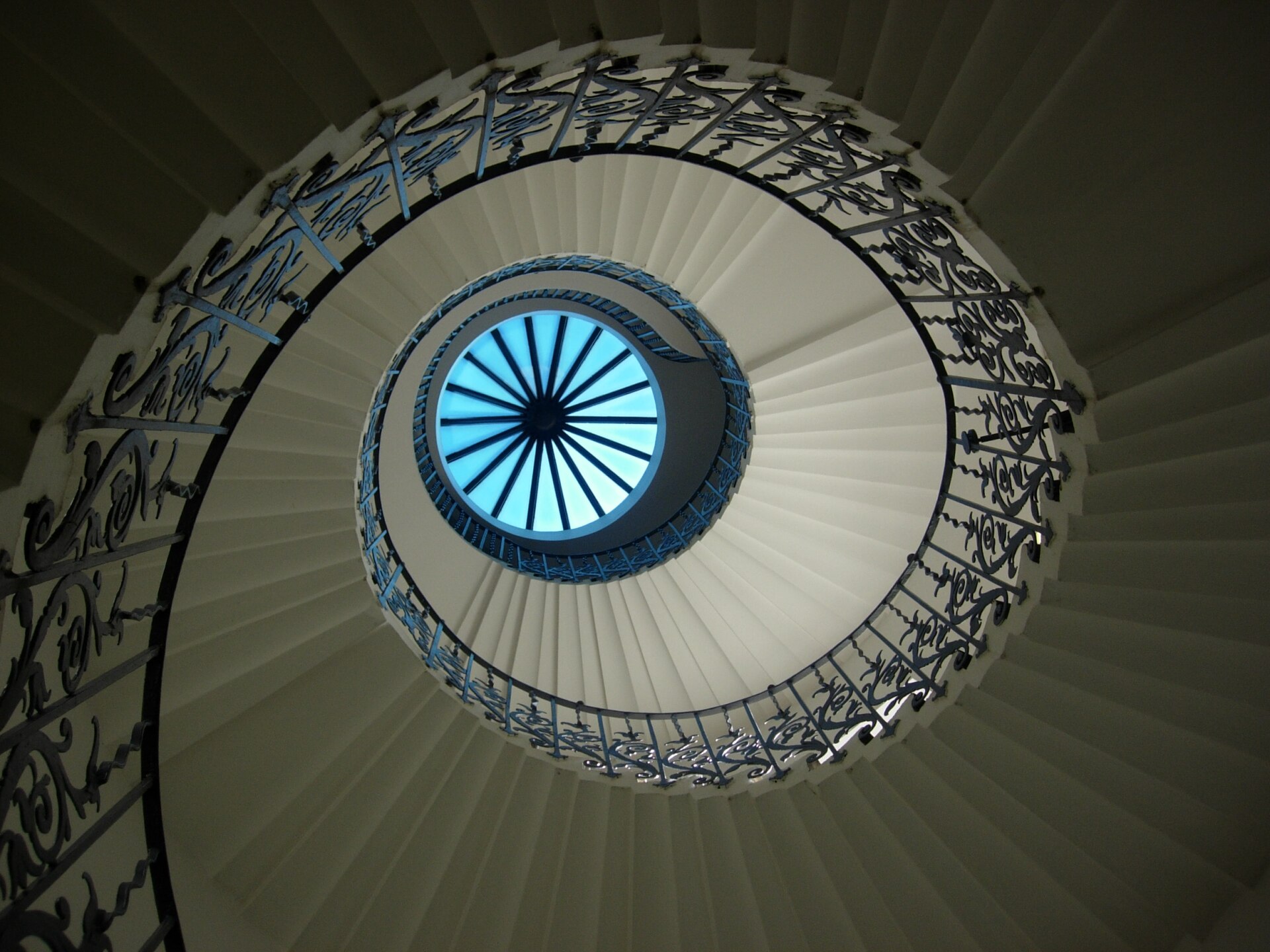
Designed by Inigo Jones — begun in 1616 for Anne of Denmark and completed in the 1630s for Henrietta Maria — the Queen’s House is the first consciously classical building in England and now the art-filled heart of Royal Museums Greenwich. Its Tulip Staircase, named for the floral forms in its wrought-iron balustrade, was the first geometric, self-supporting spiral stair built in Britain. It is also the site of the most honestly investigated ghost photograph we know of.
On Sunday 19 June 1966, at about 5:15 p.m., the Rev. R. W. Hardy, a retired clergyman from White Rock, British Columbia, photographed the staircase while visiting with his wife. The stair was roped off with a “No Admittance” sign; Mrs Hardy stood beside him and confirmed it was empty. Developed back in Canada, the frame showed a shrouded figure climbing the stair, gripping the balustrade with both hands. What happened next is why this case endures: the Hardys sent the original negative — plus the frames before and after it — to the Ghost Club, whose president Peter Underwood passed the negatives to Kodak. Kodak’s technicians examined them and found no evidence of tampering or double exposure, concluding that on the film’s evidence, someone must have been on the stairs when the shutter fired. In 1967 the Hardys returned and, with the museum’s senior photographer Brian Tremain, shot yards of film attempting to reproduce the effect with a real person — without success. Museum staff had reported unexplained figures and footsteps around the staircase in the years before the photograph, and reports continued after: gallery assistant Tony Anderson described, in 2002, a woman in a white-grey crinoline dress gliding across the west balcony and passing through a wall, seen by him and colleagues.
The honest check — and the Atlas states it precisely, because retellings inflate it. Kodak established something narrow and genuinely impressive: the negative is a genuine, unmanipulated single exposure. That rules out a faked photograph. It does not and cannot rule out a real person on the stairs: skeptics note the exposure was long — around a second, handheld — and the figure’s blur is consistent with movement. Against that stand the Hardys’ sworn accounts and the roped-off, empty stair. The investigation is exactly why both sides can still argue about it, sixty years on. (The 1966 photograph itself is not freely licensed, so we describe it rather than reproduce it — the staircase above is the same one, photographed from below.)
Visit: Free entry, open daily (typically 10:00–17:00). The Tulip Staircase is inside the House and is itself a standard photo stop — visitors replicate Hardy’s shot from the same spot.
5. Highgate Cemetery
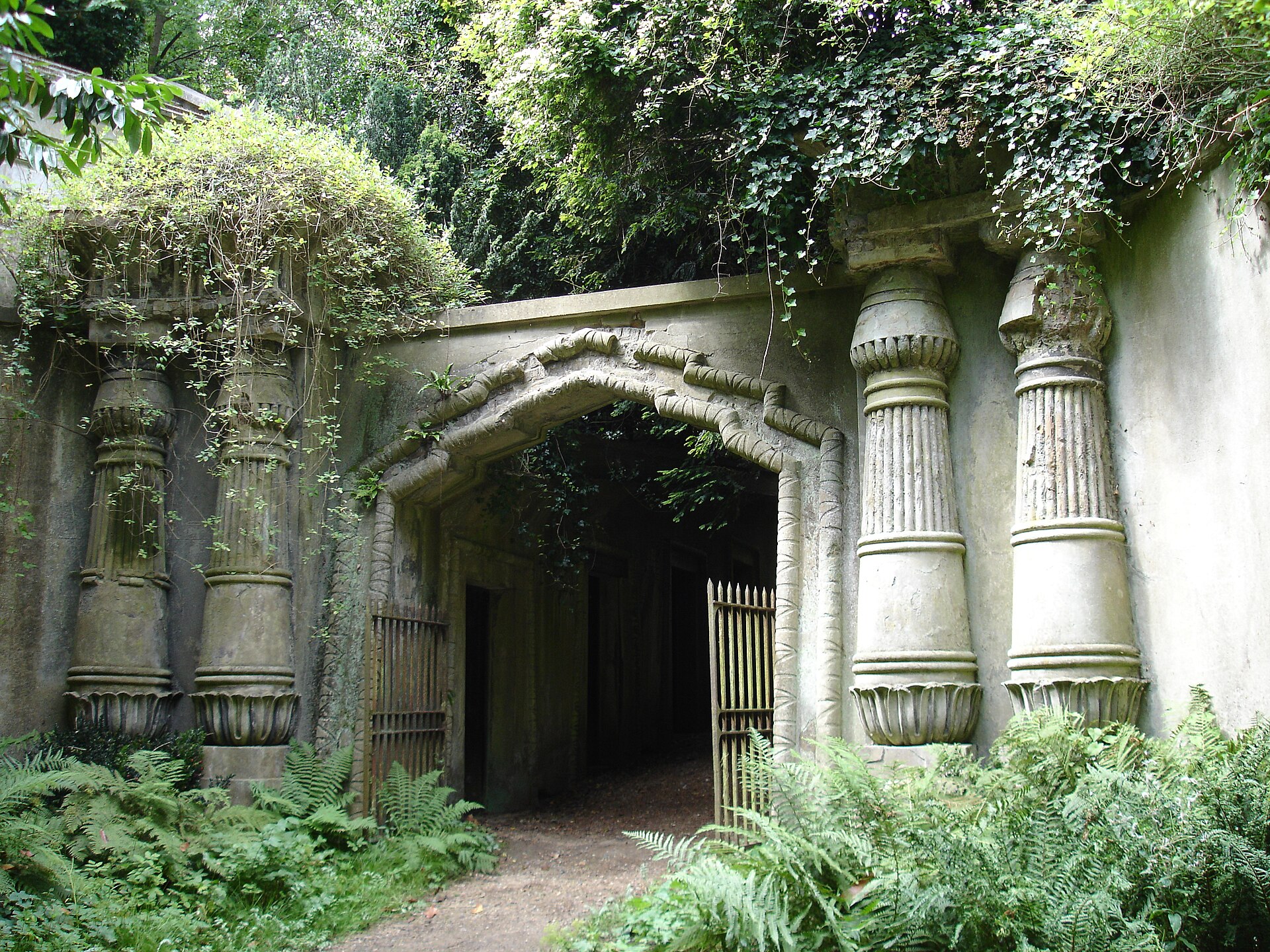
Opened in 1839, designed by Stephen Geary — the first of London’s “Magnificent Seven” great garden cemeteries, built to relieve the city’s overflowing churchyards. The West Cemetery holds the masterpieces: the Egyptian Avenue, pictured above, and the Circle of Lebanon around its great cedar. The East Cemetery, added in 1854, holds Karl Marx. Some 170,000 people rest in roughly 53,000 graves; the site is Grade I-listed and still an active burial ground. And in 1970, it became the scene of the best-documented ghost panic in British history — because the haunting here was never a ghost at all.
The paper trail is complete. On 6 February 1970, the Hampstead and Highgate Express published a letter from David Farrant of the British Psychic and Occult Society: passing the cemetery on Christmas Eve 1969, he had glimpsed “a grey figure” he believed supernatural, and asked whether others had seen it. Replies described a miscellany of Swain’s Lane ghosts. Then Sean Manchester claimed the figure was a vampire — in a front-page interview on 27 February (“Does a wampyr walk in Highgate?”) he expounded a “King Vampire of the Undead,” a medieval Wallachian nobleman whose coffin had supposedly reached Highgate in the 18th century. On Friday 13 March 1970, ITV broadcast interviews with both men at 6 p.m. Within about two hours, a crowd estimated in the hundreds had broken through the cemetery gates with stakes, crosses, and spades. Graves were damaged that night and in copycat intrusions through the 1970s; Farrant was arrested in the cemetery that August carrying a cross and a wooden stake. The two men’s public feud ran for decades.
The scholarly account — folklorist Bill Ellis, “The Legend of the Highgate Vampire,” Folklore (1993) — documents how a vague ghost letter, a rival’s embellishment, local-paper appetite, and one TV broadcast manufactured a full folk panic in six weeks. There is no record of any “vampire” before Farrant’s grey figure; the King Vampire’s biography exists only in Manchester’s interviews. The panic is real history. The vampire is its product.
Visit: The East Cemetery is self-guided (entry fee around £10; Marx’s grave is here). The West Cemetery — Egyptian Avenue, the Circle of Lebanon, the catacombs — is guided-tour only, booked through the cemetery’s own site. It remains a working burial ground; behave accordingly.
6. The Ten Bells — Whitechapel
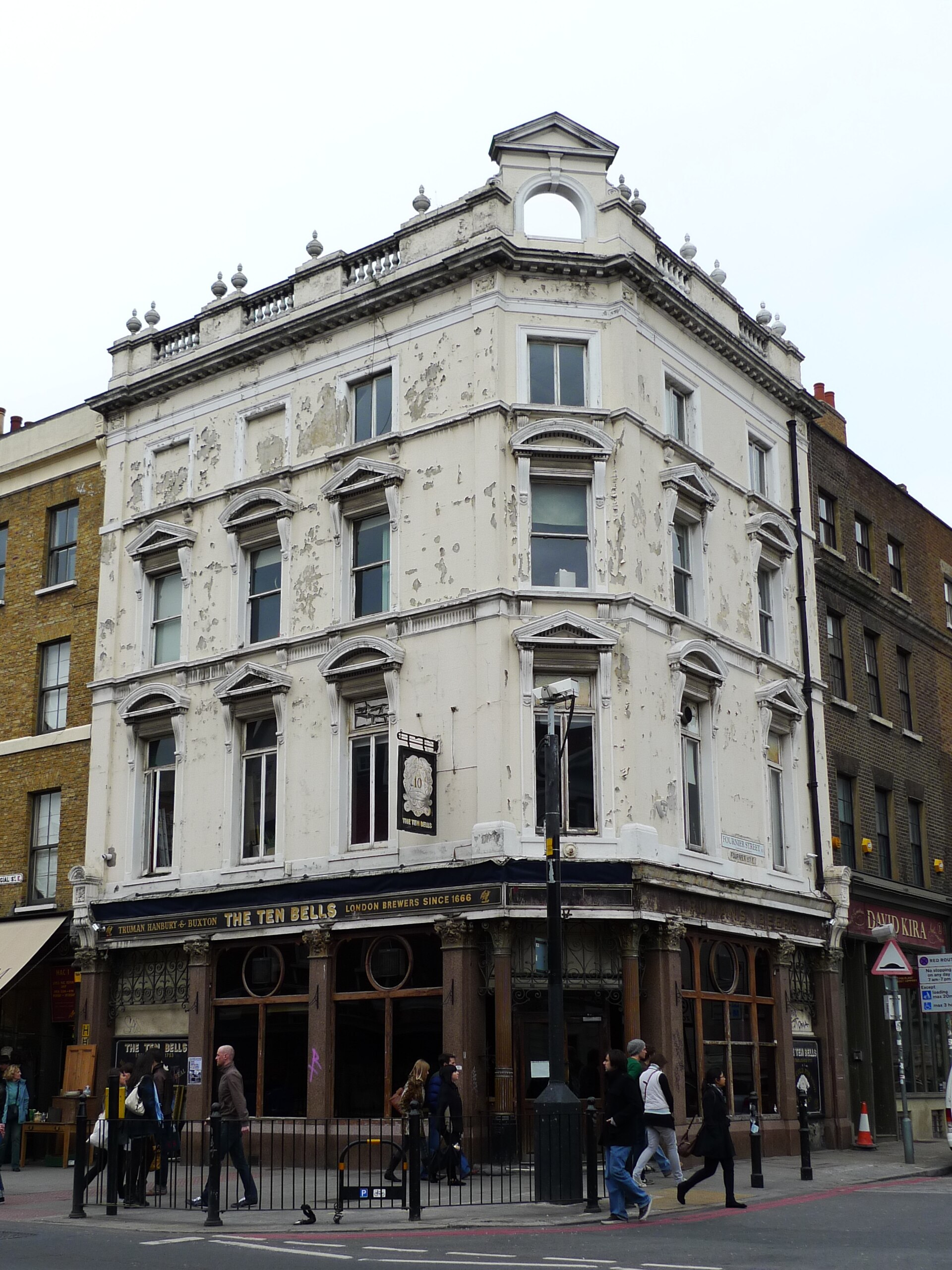
A pub has stood on the corner of Commercial Street and Fournier Street since the mid-18th century, named for the ten bells of Hawksmoor’s Christ Church, Spitalfields, directly opposite. The present building keeps its celebrated Victorian tiling and is Grade II-listed. Its fame is its position at the center of the Whitechapel of 1888 — a story this article treats as history, not spectacle.
The Ripper associations are real but must be stated precisely, because they are associations, not certainties: Annie Chapman may have had a drink at the Ten Bells shortly before her death on 8 September 1888 — no contemporary document places her in the pub that morning; her documented last movements are around the Dorset Street lodging houses. Mary Jane Kelly, killed on 9 November 1888 in Miller’s Court, directly across Commercial Street, is said to have picked up clients on the pavement outside — pavement folklore, not record. The pub’s verified dark distinction is its own name: between 1976 and 1988 it was actually renamed “The Jack the Ripper” and displayed case memorabilia, until the brewery ordered the name changed back after a long campaign by Reclaim the Night, who argued that a murderer of women should not be commemorated. That documented episode — how the case was commercialized, and the campaign that ended it — is this entry’s spine.
The ghosts are reported lore on top of it. The 1970s landlord reported gusts of cold wind and a radio switching itself on and off, and attributed it to Chapman. The stronger modern account comes from ghost historian Richard Jones: in the late 1990s, live-in staff on the upper floors repeatedly reported waking to find an old man in Victorian clothing lying beside them in bed, vanishing when they cried out — multiple staff, no prior knowledge of the story, the same description. Jones also recounts a landlord in June 2000 finding, in the cellar, a metal box of effects belonging to a George Roberts, tentatively identified as a late-19th-century keeper of the pub. Print that as Jones’s account, not verified record.
Visit: A working pub at 84 Commercial Street — free to enter as a customer; the Victorian tiled interior is the real draw. It’s a standard stop on Whitechapel walking tours (see below).
7. The Grenadier — Belgravia
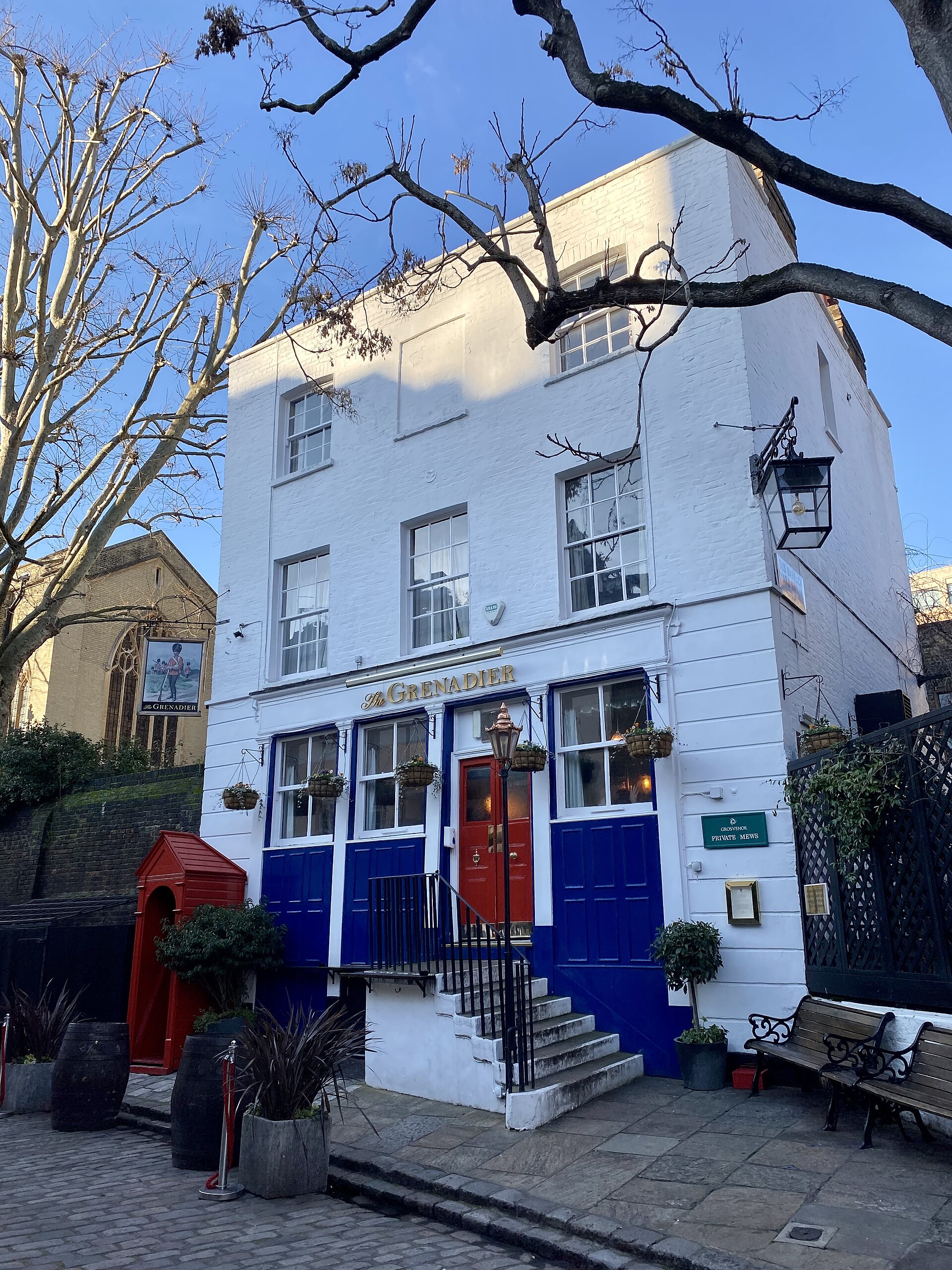
The building at 18 Wilton Row, a cobbled mews off Wilton Place, was built in 1720 as the officers’ mess of the 1st Regiment of Foot Guards; it opened as a pub in 1818 and was renamed The Grenadier in honour of the Grenadier Guards at Waterloo. The Duke of Wellington and George IV are said to have drunk here; a red sentry box still stands outside. It is frequently billed as London’s most haunted pub — and it reports its haunting on the record.
The ghost is “Cedric,” a young grenadier said to have been caught cheating at cards in the cellar gambling den and beaten to death by his comrades — in September, which is when activity is said to peak. A Grenadier spokesperson, quoted in press coverage, described it plainly: “Objects seem to either disappear or move without explanation. Tables and chairs rattle inexplicably… an icy chill… Footsteps have been heard wandering around empty rooms, and every so often, low sighing moans are heard from the depths of the cellar” — and retold the story of a Chief Superintendent from New Scotland Yard whose hand was burned by an invisible cigarette. The pub’s ceiling is covered in banknotes pinned up by visitors from all over the world — a living tradition said to be paying off Cedric’s gambling debt. That ceiling is real, and you can stand under it.
The honest check: Cedric himself is unverifiable. No regimental or newspaper record of a guardsman of that name beaten to death at the mess has ever been produced, and the story cannot be traced in print to the period it describes. He is the pub’s beloved house legend — and the Grenadier makes this list on the strength of its documented building and the pub’s own on-record modern reports, not on a death that can’t be shown to have happened.
Visit: A working pub — free to enter as a customer. Famously easy to miss: a mews behind Wilton Place, nearest tubes Hyde Park Corner and Knightsbridge.
8. 50 Berkeley Square — Mayfair
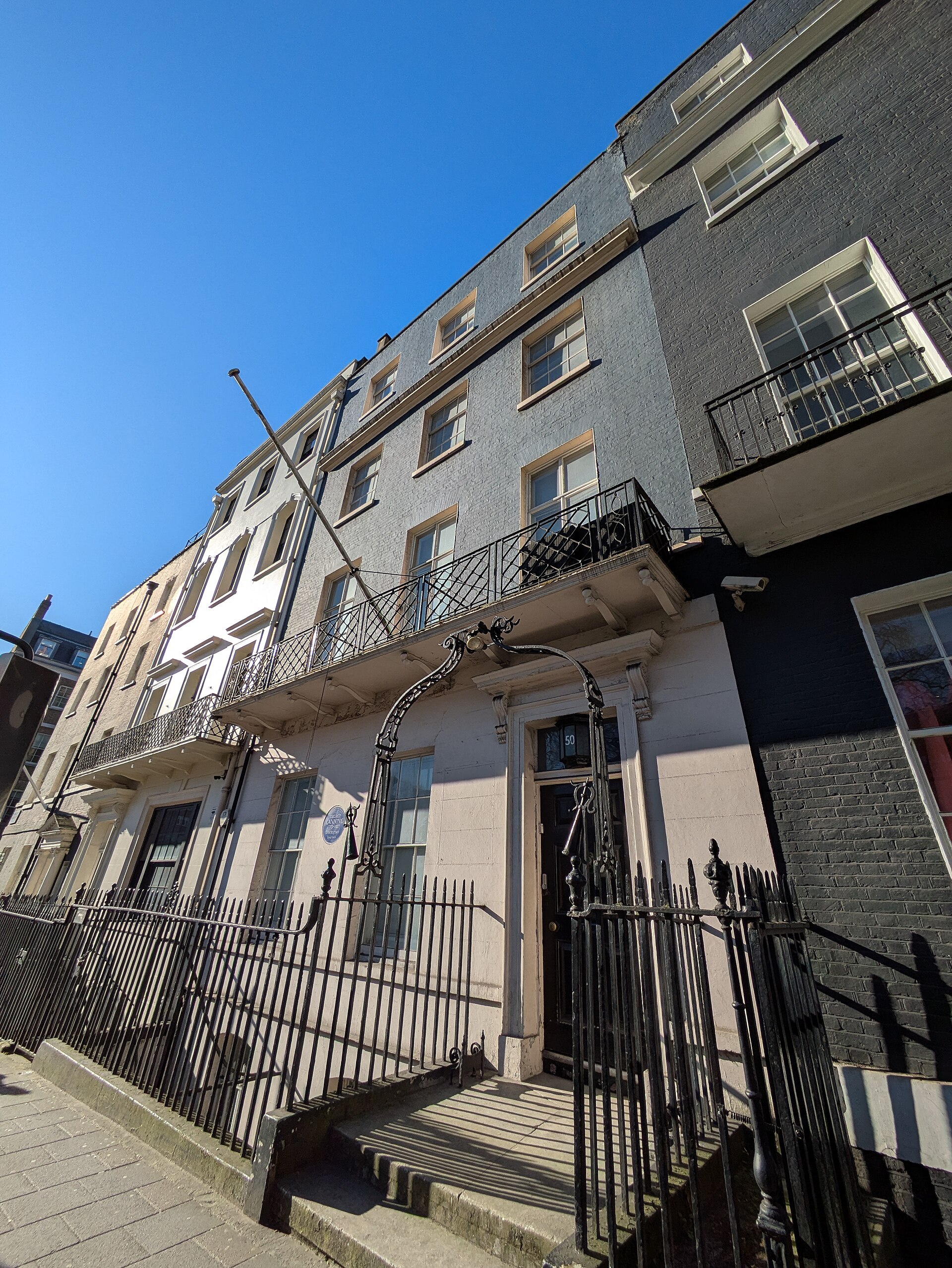
A Georgian terraced house built around 1750 on the west side of Berkeley Square — once the London home of Prime Minister George Canning (there’s a blue plaque). From 1859 to 1874 it was the home of Thomas Myers, who lived increasingly reclusively as the house decayed around him — the tenancy in which its sinister reputation formed. Since 1938 it has housed Maggs Bros., the antiquarian booksellers. It closes this list because it is the mirror image of the Tower of London: there, documented deaths and a ghost record that starts late; here, an early ghost record — and no documented deaths at all.
The haunting’s paper trail is Victorian print. In 1872, George, Lord Lyttelton spent a night in the attic on a dare, armed with a shotgun; he reported a brown-mist apparition that filled him with terror, fired at it, and found only spent cartridges in the morning. In 1879, Mayfair Magazine alleged that a maid sent to prepare the attic room had been found insane and died in an asylum the next day. Later writers added the growth rings: a young woman who threw herself from the top window fleeing an abusive uncle; a young man locked in the attic and fed through a slot; two sailors from HMS Penelope in 1887, one found dead by morning; the epithet “the Nameless Horror.”
The honest check is documented in the reference literature itself: many of the stories about the house were exaggerated or invented by later writers. There is no coroner’s, police, or newspaper record of any death by fright at this address. “The most haunted house in London” is a Victorian publishing phenomenon — a haunting whose legend is fully documented even though its ghost is not. For the Atlas, that’s a perfect closing entry.
Visit: Exterior only. Berkeley Square is public and the house is a standard stop on Mayfair ghost walks — but Maggs Bros. is a working bookshop, not a haunted-house attraction. Look from the square; don’t go in expecting ghosts.
London Ghost Tours You Can Book
Most of these places reward an evening visit, and London’s ghost-tour scene is deep. Four operators verified as running in 2026 — with one honest caution included, because that’s how we do things here.
The Ghost Bus Tour (“The Necrobus”). A comedy-horror sightseeing show aboard a vintage 1960s Routemaster bus, with a conductor-host and on-board actors, covering Westminster, Fleet Street, the Tower, and London Bridge. 75 minutes; departures at 18:00, 19:30, and 21:00 from 8 Northumberland Avenue, off Trafalgar Square. Adults £27.50, children £18.70 (October 2026 listings).
The Jack the Ripper Tour (with Ripper-Vision®). A specialist evening walk through Whitechapel whose guides project period images onto the streets themselves. It passes the Ten Bells (entry 6), and the reputable operators frame the walk as the social history of the victims and the East End — the framing this article echoes. About 1 hour 45 minutes, daily at 17:00 and 19:30, meeting outside Aldgate East station (Exit 3). From around £20 per adult.
London Ghost Tour with Thames River Cruise. An evening ghost walk through Westminster — its first stop is Berkeley Square (entry 8) — combined with a Thames cruise and ending at Tower Hill beside the Tower (entry 1): two of this article’s locations on one ticket. About 2 hours 30 minutes, meeting at Green Park station; rated 4.6 stars from more than 3,300 reviews on Viator. The honest caution: several recent reviewers report the river portion is issued as a voucher for a separate cruise rather than a group boat segment, and the guided portion can run shorter than advertised — check the current inclusions when you book.
London Walks — “Ghosts of the Old City.” The original London walking-tour company’s Saturday-night ghost walk through the City’s alleyways and churchyards. About 2 hours, Saturdays at 19:30, meeting outside St Paul’s tube station (Exit 2). London Walks’ standard per-walk price, confirmed on their site.
Frequently Asked Questions
What is the most haunted place in London?
By volume and longevity of reported lore, the Tower of London — Anne Boleyn, the Princes, Lady Jane Grey, and a Resident Governor’s on-record account from the 1990s. With the honest caveat that its famous sightings are documented from the Victorian era onward, not from the Tudor deaths themselves.
Is the Tulip Staircase ghost photograph real?
The negative is genuinely unmanipulated: Kodak examined it in the 1960s and found no tampering or double exposure. That proves the film wasn’t faked — whether someone was on the roped-off stairs in June 1966 is the argument that has run ever since.
Was there really a vampire in Highgate Cemetery?
No evidence of one has ever existed. What is documented is the 1970 panic itself: a local-paper letter, a rival’s “King Vampire” theory, a TV broadcast, and a mob at the gates on Friday 13 March 1970. Folklorist Bill Ellis’s 1993 Folklore study is the definitive account.
Are the bones in Westminster Abbey really the Princes in the Tower?
Nobody knows. Found under a White Tower staircase in 1674 and reburied in the Abbey in 1678, they were judged “consistent with” the Princes in 1933 — but identity has never been proven, and modern DNA testing has been declined.
Can you visit all of London’s most haunted places?
Seven of the eight, yes — the pubs are free to walk into, and the Tower, Hampton Court, Westminster Abbey, the Queen’s House, and Highgate are ticketed or free-entry attractions. The exception is 50 Berkeley Square: a private antiquarian bookshop, viewable only from the square itself.
Keep exploring
The Paris Catacombs: History, Hauntings & How to Visit
Twenty metres beneath the streets of Paris, in tunnels the city dug to build itself, lie the bones of more than six million Parisians — stacked…
Read story →
8 Haunted Places in Transylvania (Historic Guide)
Transylvania is the most famous haunted address on earth — and the place where the Atlas rule matters most. The Dracula story everyone arrives with is,…
Read story →
8 Haunted Places in Ireland (Historic Guide)
8 Haunted Places in Ireland (Historic Guide) Halloween began in Ireland. Before it was costumes and candy, it was Samhain, the festival that marked the end…
Read story →